Author: xts_blog

  • Bitcoin Rebounds Sharply: How Regulation, Treasury Buybacks, and ETF Flows Are Shaping the Rally | XTS Insights

    An XTS market brief on Bitcoin’s August 2026 rebound, the CLARITY Act, U.S. Treasury buybacks, institutional demand, and the risks investors should still watch.

    Market Data Note

    The headline market snapshot supplied for this article states that Bitcoin briefly traded above $76,000, gained more than 9% over 24 hours, and rose about 21% over seven days as of 21 August 2026. Cryptocurrency prices vary by venue and can change within seconds. Public reporting earlier in the same move showed Bitcoin near $72,772, an intraday high around $72,960, and a gain of approximately 9.31% on that feed. Readers should verify live prices before making decisions.

    Introduction

    Bitcoin has staged a forceful rebound, returning market attention to the interaction between policy expectations, bond-market liquidity, institutional capital, and trader positioning. According to the market snapshot supplied for this article, BTC briefly moved above $76,000, gained more than 9% in 24 hours, and advanced approximately 21% over the previous week.

    The speed of the move matters. Bitcoin did not rise on one isolated headline. Several developments arrived together: President Donald Trump renewed pressure for Congress to advance a fair version of the Digital Asset Market Clarity Act; the U.S. Treasury expanded planned buybacks of longer-dated government debt; spot Bitcoin exchange-traded funds recorded a notable day of net inflows; and short covering amplified the initial advance.

    Together, these factors produced a more constructive narrative for digital assets. Yet a strong rebound does not automatically establish a durable new uptrend. This XTS Insights market brief explains what is driving the move, what each catalyst can and cannot do, and which signals may determine whether the rally continues.

    Bitcoin’s Rebound at a Glance

    Price momentum: BTC briefly exceeded $76,000 in the publisher-supplied intraday snapshot.

    Short-term performance: the snapshot showed a gain of more than 9% over 24 hours and about 21% over seven days.

    Regulation: renewed White House support for the CLARITY Act improved expectations for a clearer U.S. digital-asset framework.

    Liquidity sentiment: the Treasury increased the size of long-end liquidity-support buybacks, which markets interpreted as helpful for Treasury-market functioning and broader risk sentiment.

    Institutional flows: U.S. spot Bitcoin ETFs recorded $517.19 million in net inflows on one reported day, the strongest daily result since early May.

    Positioning: short covering likely accelerated the rebound as bearish traders were forced to reduce or close positions.

    The central market question is not whether these catalysts are positive in isolation, but whether they can produce sustained demand after the first burst of short covering fades.

    Driver 1: Improving U.S. Regulatory Expectations

    Regulatory uncertainty has long been one of the largest barriers to broader digital-asset participation in the United States. Institutions typically need clear rules for custody, trading, disclosure, asset classification, market supervision, and compliance before committing significant capital or building new products.

    The Digital Asset Market Clarity Act of 2025, commonly called the CLARITY Act, seeks to create a federal market structure for digital commodities. The House of Representatives passed H.R. 3633 in July 2025, and the bill was later referred to the Senate Committee on Banking, Housing, and Urban Affairs. As of this market brief, it has not become law.

    President Trump’s renewed call for Congress to pass a fair version of the legislation encouraged traders because a clearer division of responsibility between the Commodity Futures Trading Commission and the Securities and Exchange Commission could reduce legal ambiguity. That may make it easier for exchanges, custodians, brokers, asset managers, and other regulated firms to plan long-term participation.

    Why Regulatory Clarity Can Support Bitcoin

    It may reduce compliance uncertainty for financial institutions.

    It can improve confidence in regulated custody and trading infrastructure.

    It may encourage new products and services built around digital assets.

    It gives institutional committees a clearer framework for evaluating Bitcoin exposure.

    It can reduce the risk premium attached to unpredictable enforcement or overlapping jurisdiction.

    However, supportive rhetoric is not the same as enacted legislation. The final text could change, the Senate process could remain slow, and implementation would still require detailed rulemaking. Markets are currently pricing an improvement in probability, not a completed regulatory outcome.

    Driver 2: U.S. Treasury Buybacks and the Liquidity Narrative

    The U.S. Treasury also became part of the Bitcoin narrative after increasing the size of its liquidity-support buybacks for longer-dated nominal Treasury securities. Reporting described individual long-end operations rising from $2 billion to $4 billion, while the Treasury’s quarterly refunding materials outlined up to $38 billion of off-the-run liquidity-support buybacks for the coming quarter.

    Treasury buybacks allow the government to repurchase selected older, less liquid securities and issue more liquid benchmark debt. The objective is to improve the functioning and liquidity of the Treasury market. This is not the same as Federal Reserve quantitative easing, it is not direct money creation, and it is not a government purchase of Bitcoin.

    Why Bitcoin Traders Still Care

    Bitcoin is sensitive to global liquidity conditions, bond yields, the U.S. dollar, and investors’ willingness to own risk. If Treasury-market functioning improves and pressure at the long end of the yield curve eases, investors may become more comfortable allocating to equities, technology shares, and digital assets.

    That connection is indirect. A buyback operation does not mechanically send capital into BTC. Instead, it can influence the broader financial environment through yields, dealer balance sheets, volatility, and risk appetite. The market’s bullish interpretation is therefore a liquidity narrative rather than a guaranteed transmission mechanism.

    Treasury buybacks may support market functioning, but calling them ‘money printing for Bitcoin’ would be inaccurate. The effect on BTC depends on how yields, the dollar, leverage, and investor risk appetite respond.

    Driver 3: Spot Bitcoin ETF Inflows Revive Institutional Demand

    Institutional demand remains one of the most closely watched supports for Bitcoin. U.S. spot Bitcoin ETFs provide regulated market access without requiring investors to manage private keys or operate digital-asset infrastructure directly.

    According to reported fund-flow data, U.S. spot Bitcoin ETFs attracted $517.19 million in net inflows on Wednesday, their strongest daily result since early May. BlackRock’s IBIT led with approximately $284.7 million, followed by ARK 21Shares’ ARKB with about $77.7 million and Fidelity’s FBTC with about $62.4 million.

    A strong inflow day matters because authorized participants and fund structures ultimately connect ETF demand with the underlying Bitcoin market. Persistent positive flows can absorb available supply, reinforce confidence, and demonstrate that regulated access remains attractive to professional and traditional investors.

    What ETF Flows Do Not Prove

    ETF inflows are a useful proxy for demand, but they should not be treated as a perfect measure of long-term conviction. Flows can reflect portfolio rebalancing, tactical trades, hedging, arbitrage, or basis strategies. They can also reverse quickly. One large day is encouraging; a sustained series of positive sessions would provide stronger evidence of renewed institutional accumulation.

    Driver 4: Short Covering Amplified the Move

    Fast rallies often contain a mechanical element. When traders hold short positions, a rising price creates losses and may trigger stop orders, margin calls, or forced liquidations. Buying Bitcoin to close those shorts can push the price higher, forcing additional bearish positions to unwind.

    Reuters reporting noted short covering as an important part of the advance. This does not make the rally meaningless. Short squeezes can begin around genuine catalysts and help prices break through technical resistance. But they can also produce rapid moves that cool once forced buying is complete.

    The next test is whether spot demand, ETF flows, and broader risk appetite remain strong enough to replace the temporary buying created by liquidations.

    How the Four Catalysts Connect

    The rebound becomes easier to understand when the catalysts are viewed as a chain rather than as separate stories.

    Improving regulatory expectations reduce the perceived long-term barrier to institutional participation.

    A better Treasury-market liquidity narrative can support lower financial stress and stronger appetite for risk assets.

    Spot ETF inflows provide visible evidence that regulated investment channels are attracting capital again.

    Short covering converts the improved narrative into faster near-term price momentum.

    This combination can be powerful because it joins a structural story with immediate market flows. Regulation shapes what institutions may be willing to do; liquidity shapes how much risk they can tolerate; ETFs provide an access channel; and positioning determines how violently price responds.

    The Bullish Interpretation

    The optimistic case is that Bitcoin is transitioning from an oversold or heavily shorted market into a broader recovery supported by improving policy expectations and renewed institutional demand. If ETF inflows persist, Treasury yields remain orderly, and lawmakers continue advancing a workable market-structure bill, the rebound could attract additional capital that had remained on the sidelines.

    A sustained break above important technical levels could also improve trend-following demand. Investors who reduced exposure during weakness may return if the market demonstrates that higher prices are being supported by spot buying rather than leverage alone.

    Risks That Could Challenge the Rally

    A balanced market analysis must also identify what could go wrong. Bitcoin remains volatile, and every supportive narrative has limitations.

    Legislative risk: the CLARITY Act could be delayed, materially revised, or fail to secure enough Senate support.

    Flow risk: ETF inflows may weaken or reverse after a single strong session.

    Liquidity risk: Treasury buybacks may improve market functioning without producing a lasting decline in yields or stronger risk appetite.

    Positioning risk: once short covering ends, the market may lack enough fresh spot demand to hold recent gains.

    Macro risk: inflation, Federal Reserve expectations, the dollar, geopolitics, or stress in credit markets could pressure risk assets.

    Technical risk: a failed breakout above recent resistance could encourage profit-taking and renewed short selling.

    What Investors Should Watch Next

    1. Several Days of ETF Flow Data

    A continued sequence of net inflows would be more meaningful than one exceptional day. Watch whether demand is distributed across several funds or concentrated in a single product.

    2. Progress in the U.S. Senate

    Statements of support can move sentiment, but committee action, amendments, bipartisan backing, and a realistic voting timetable would offer stronger evidence that legislation is advancing.

    3. Treasury Yields and the U.S. Dollar

    Bitcoin often benefits when financial conditions become less restrictive. A sharp rebound in long-term yields or the dollar could weaken the current liquidity narrative.

    4. Spot Volume Versus Leverage

    Healthy spot-market participation would make the rally more durable. A move dominated by perpetual futures, rising leverage, and liquidations may be more vulnerable to reversal.

    5. Whether Bitcoin Holds the Breakout Area

    The ability to consolidate above recently reclaimed levels would indicate that buyers are accepting higher prices. A quick return below the breakout zone would suggest the move was driven mainly by positioning.

    XTS Perspective

    At XTS, we view this rebound as a useful example of how Bitcoin now trades at the intersection of crypto-native market structure and traditional finance. Blockchain fundamentals remain important, but price can also respond quickly to legislation, government bond operations, ETF flows, interest rates, and derivatives positioning.

    The current setup is constructive because multiple catalysts point in the same direction. Regulatory expectations have improved, the Treasury has acted to support the liquidity of longer-dated government debt, and spot Bitcoin ETFs have shown renewed demand. However, none of these factors guarantees a straight-line move higher.

    The most credible confirmation would be persistence: repeated ETF inflows, measurable legislative progress, stable macro conditions, and price strength supported by spot volume. Education and disciplined risk awareness remain essential when headlines and prices are moving quickly.

    Frequently Asked Questions (FAQ)

    Why Did Bitcoin Rebound So Strongly?

    The rebound appears to reflect a combination of improved U.S. regulatory expectations, a more supportive Treasury-market liquidity narrative, renewed spot Bitcoin ETF inflows, and short covering. No single catalyst explains the entire move.

    Did Bitcoin Really Trade Above $76,000?

    The publisher-supplied intraday snapshot for 21 August 2026 states that BTC briefly exceeded $76,000. Prices differ across exchanges and change continuously, while public reports earlier in the same move showed lower levels. Always confirm the live price on a reliable market-data platform.

    Has the CLARITY Act Become Law?

    No. The House passed H.R. 3633 in July 2025, and it was referred to the Senate Banking Committee. The market is reacting to renewed political support and the possibility of progress, not to final enactment.

    Are Treasury Buybacks the Same as Quantitative Easing?

    No. Treasury buybacks are debt-management and market-liquidity operations conducted by the U.S. Treasury. Quantitative easing is a monetary-policy program conducted by the Federal Reserve. The mechanisms, objectives, and balance-sheet effects are different.

    Why Do Spot Bitcoin ETF Inflows Matter?

    They show demand through regulated investment products and can connect traditional portfolios with underlying Bitcoin exposure. Sustained inflows are generally more informative than one strong day.

    Does This Rally Confirm a New Bull Market?

    Not by itself. A durable trend would require follow-through in price, spot demand, ETF flows, macro conditions, and policy progress. Bitcoin can remain highly volatile even during broader uptrends.

    Conclusion

    Bitcoin’s sharp rebound reflects a convergence of catalysts. Improved expectations around the CLARITY Act have reduced some regulatory anxiety. Larger Treasury buybacks have strengthened the market’s liquidity narrative. Spot Bitcoin ETF inflows have renewed attention on institutional demand. Short covering then amplified the initial move.

    The combination is encouraging, but the next stage matters more than the first reaction. If ETF demand persists, the Senate makes tangible progress, macro conditions remain supportive, and Bitcoin holds its breakout levels, the rally may develop into a broader recovery. If those signals fade, the move could prove more dependent on short-term positioning than on sustained capital allocation.

    For readers following the digital-asset market, the key lesson is clear: Bitcoin no longer trades only on crypto-specific news. Regulation, government debt markets, institutional products, global liquidity, and derivatives positioning increasingly interact to shape price.

    Key Takeaways

    • Bitcoin briefly exceeded $76,000 in the supplied 21 August 2026 market snapshot, with strong 24-hour and seven-day momentum.
    • Trump’s renewed push for the CLARITY Act improved sentiment, but the bill has not become law.
    • Larger Treasury long-end buybacks supported the liquidity narrative but are not quantitative easing or direct support for Bitcoin.
    • A reported $517.19 million daily inflow into U.S. spot Bitcoin ETFs revived attention on institutional demand.
    • Short covering likely accelerated the price move and may make near-term volatility more intense.
    • Sustained ETF flows, legislative progress, stable yields, spot volume, and price follow-through are the main confirmation signals to watch.

  • What Is a Bitcoin Seed Phrase? How Wallet Recovery Words Work | XTS Insights

    A practical beginner’s guide to Bitcoin recovery phrases, BIP39, wallet seeds, passphrases, backups, and safe wallet restoration.

    Introduction

    A Bitcoin wallet can generate many addresses and private keys, sometimes over years of use. Backing up every key separately would be difficult, error-prone, and impractical. Modern wallets solve this problem by deriving many keys from one carefully protected starting point.

    For many self-custody wallets, that starting point is backed up as a short ordered list of ordinary words. It may be called a seed phrase, recovery phrase, mnemonic phrase, wallet backup, or recovery words.

    The words look simple, but the information they protect is extremely powerful. Anyone who obtains the correct phrase – and any required passphrase or wallet details – may be able to recreate the wallet’s keys and spend its Bitcoin. If the only valid backup is lost, there is usually no central administrator who can reset it.

    A seed phrase is not merely a password for an app. In a compatible deterministic wallet, it is recovery material from which the wallet’s key structure can be rebuilt.

    In this XTS Insights guide, we will explain what a Bitcoin seed phrase is, how BIP39 recovery words work, how the phrase differs from a private key and wallet password, why compatibility details matter, and how users can protect and test a backup responsibly.

    The Short Answer: What Is a Bitcoin Seed Phrase?

    A Bitcoin seed phrase is an ordered set of words used by many deterministic wallets to recreate a wallet’s underlying seed and derive its private keys. Common BIP39 phrases contain 12, 15, 18, 21, or 24 words, although many consumer wallets primarily use 12 or 24.

    The phrase must remain secret and must be copied exactly. Word choice, order, spelling, original language, optional passphrase, wallet standard, derivation paths, and script type can all affect which wallet is recovered.

    The phrase is a human-readable backup of wallet-generating information.

    The words are ordered; rearranging them changes or invalidates the backup.

    A deterministic wallet can derive many private keys and addresses from one seed.

    Anyone with the complete recovery material may be able to control the wallet.

    A seed phrase cannot be reset by the Bitcoin network.

    Not every wallet uses BIP39, and a phrase alone may not capture every recovery setting.

    What Does a Seed Phrase Actually Represent?

    In a typical deterministic wallet, the phrase is not stored on the Bitcoin blockchain. It is created locally by wallet software or a hardware signing device from secure random data. The words provide a more human-manageable way to record that recovery information than a long binary or hexadecimal value.

    The wallet converts the phrase into a binary seed. A hierarchical deterministic wallet can then use that seed to generate a master key structure and a tree of child private and public keys. Those keys create the addresses or spending conditions associated with the wallet.

    Simplified flow: secure randomness -> recovery words -> binary seed -> master key structure -> many private keys, public keys, and Bitcoin addresses.

    This diagram is useful for beginners, but real recovery also depends on the wallet’s standards and configuration. The phrase does not necessarily record labels, notes, transaction descriptions, contacts, device settings, or every policy used by a complex wallet.

    Why Do Bitcoin Wallets Use Recovery Words?

    Early wallets could hold unrelated private keys and required new backups as additional keys were created. Deterministic wallets improved this model by deriving future keys from a common root. One durable backup could recreate a large key tree.

    Words are easier for people to copy, check, and store offline than raw computer data. A standardized wordlist also allows wallets to detect some transcription errors through a checksum. The checksum is helpful, but it is not full error correction and should never replace careful verification.

    One backup can recover many wallet keys.

    The backup can be written or engraved without storing a wallet file online.

    Standard formats can improve compatibility between supporting wallets.

    The user can replace a lost or damaged device without moving the Bitcoin first.

    The same convenience concentrates risk into one highly sensitive secret.

    What Is BIP39?

    BIP39 is a widely used specification for creating mnemonic sentences and converting them into a binary seed for deterministic wallets. It defines how computer-generated entropy, a checksum, a 2,048-word list, and an optional passphrase are processed.

    Entropy, Checksum, and Words

    A BIP39 wallet begins with 128 to 256 bits of cryptographically secure entropy in 32-bit increments. It adds a short checksum derived from SHA-256, divides the result into 11-bit groups, and maps each group to one word from a 2,048-word list.

    128 bits of entropy produces 12 words.

    160 bits produces 15 words.

    192 bits produces 18 words.

    224 bits produces 21 words.

    256 bits produces 24 words.

    Twelve- and twenty-four-word phrases are the most familiar, but the other lengths are valid under BIP39. More words can represent more entropy, yet implementation quality, physical backup safety, device security, and user behavior remain essential.

    From Mnemonic Words to a Binary Seed

    BIP39 uses PBKDF2 with HMAC-SHA512 to process the normalized mnemonic sentence and the string ‘mnemonic’ plus an optional passphrase. The specified iteration count is 2,048, and the output is a 512-bit seed.

    That seed can then be used by BIP32 or another deterministic wallet system. BIP39 describes the mnemonic-to-seed step; BIP32 describes a hierarchical tree of derived keys. They solve related but different parts of wallet design.

    Do Not Invent Your Own Phrase

    BIP39 is designed to transport computer-generated randomness in a human-readable form. It is not a recommendation to choose favorite words, song lyrics, quotations, birthdays, or memorable sentences. Human-created phrases are usually far more predictable than securely generated wallet entropy.

    How Does a Seed Phrase Create a Bitcoin Wallet?

    A trusted wallet or signing device generates secure random entropy.

    The wallet encodes the entropy and checksum as an ordered mnemonic phrase.

    The phrase and optional passphrase are processed into a binary seed.

    The wallet derives a master extended key structure from that seed.

    Defined derivation paths create accounts, receiving branches, change branches, and child keypairs.

    Public keys and wallet policies produce Bitcoin addresses or output scripts.

    Private keys authorize spending, while the recovery material can recreate the same deterministic structure when compatible settings are used.

    The Bitcoin itself is not stored inside the words or the device. Bitcoin ownership is represented by spendable outputs recorded on the blockchain. The wallet reconstructs the keys needed to satisfy the spending conditions attached to those outputs.

    Seed Phrase, Wallet Seed, and Private Key: What Is the Difference?

    Seed Phrase or Mnemonic

    The human-readable ordered words used as recovery material. Under BIP39, the words are transformed into a 512-bit binary seed.

    Binary Wallet Seed

    The machine-readable output used to create a deterministic master key structure. Users normally back up the words rather than handling this value directly.

    Private Key

    A secret number used to create a valid signature for a particular key-controlled spending condition. A deterministic wallet can derive many private keys from one wallet seed.

    Public Key and Bitcoin Address

    A public key is derived from a private key and can help verify signatures. A Bitcoin address is a shareable encoding that helps a sender construct an output script. Neither should be confused with the wallet’s recovery phrase.

    Wallet Password or Device PIN

    A password or PIN normally protects local access to an app, wallet file, or signing device. It may slow or block someone using that device, but it does not replace the seed phrase. A user who restores from valid recovery material can usually choose a new local password or PIN.

    What Is a BIP39 Passphrase?

    BIP39 allows an optional passphrase to be combined with the mnemonic. Every passphrase produces a valid-looking seed, so a wrong passphrase usually opens a different wallet rather than displaying a simple ‘incorrect password’ warning.

    The passphrase is sometimes informally called a ’25th word’, but that name is misleading. It does not need to be one word, it is not selected from the BIP39 wordlist, and its exact characters, spacing, capitalization, and normalization matter.

    The same recovery words with different passphrases create different wallets.

    Losing or mistyping the passphrase can make the intended wallet inaccessible.

    Storing the phrase and passphrase together removes much of the separation benefit.

    A passphrase does not rescue weakly generated recovery words.

    Users should follow the exact instructions and recovery test provided by their wallet.

    A BIP39 passphrase adds another secret and another failure mode. It should be used only with a deliberate backup and inheritance plan.

    Why Word Order, Spelling, and Language Matter

    The phrase is data, not a sentence whose meaning can be paraphrased. Changing the order changes the encoded bits. Replacing a word with a synonym, translating the phrase, changing a required character, or adding an unintended passphrase can produce a different result.

    BIP39 includes multiple official wordlists, but the specification strongly discourages casually translating a phrase between languages. The original words and their order should be preserved exactly. Wallet support for localized wordlists also varies.

    A valid checksum can catch some mistakes, but it cannot prove that the phrase belongs to the intended wallet. Another valid phrase or passphrase combination may still derive an empty or different wallet.

    Can One Seed Phrase Restore Every Bitcoin Wallet?

    No. Recovery depends on compatibility, not only on having the correct words. A wallet must interpret the phrase using the correct standard and then search the correct key paths and script types.

    Derivation Paths and Script Types

    Wallets may organize keys under different derivation paths and create legacy, nested SegWit, native SegWit, or Taproot outputs. The same BIP39 phrase can lead to several valid account branches. A restoring wallet that checks the wrong branch may display a zero balance even though the recovery words are correct.

    Not Every Seed Phrase Is BIP39

    Some wallets use their own mnemonic format. Electrum, for example, has a seed version system and does not generate BIP39 phrases, even though it can support certain recovery workflows. A phrase should always be restored according to the wallet that created it and its official documentation.

    Descriptors, Multisig, and Collaborative Wallets

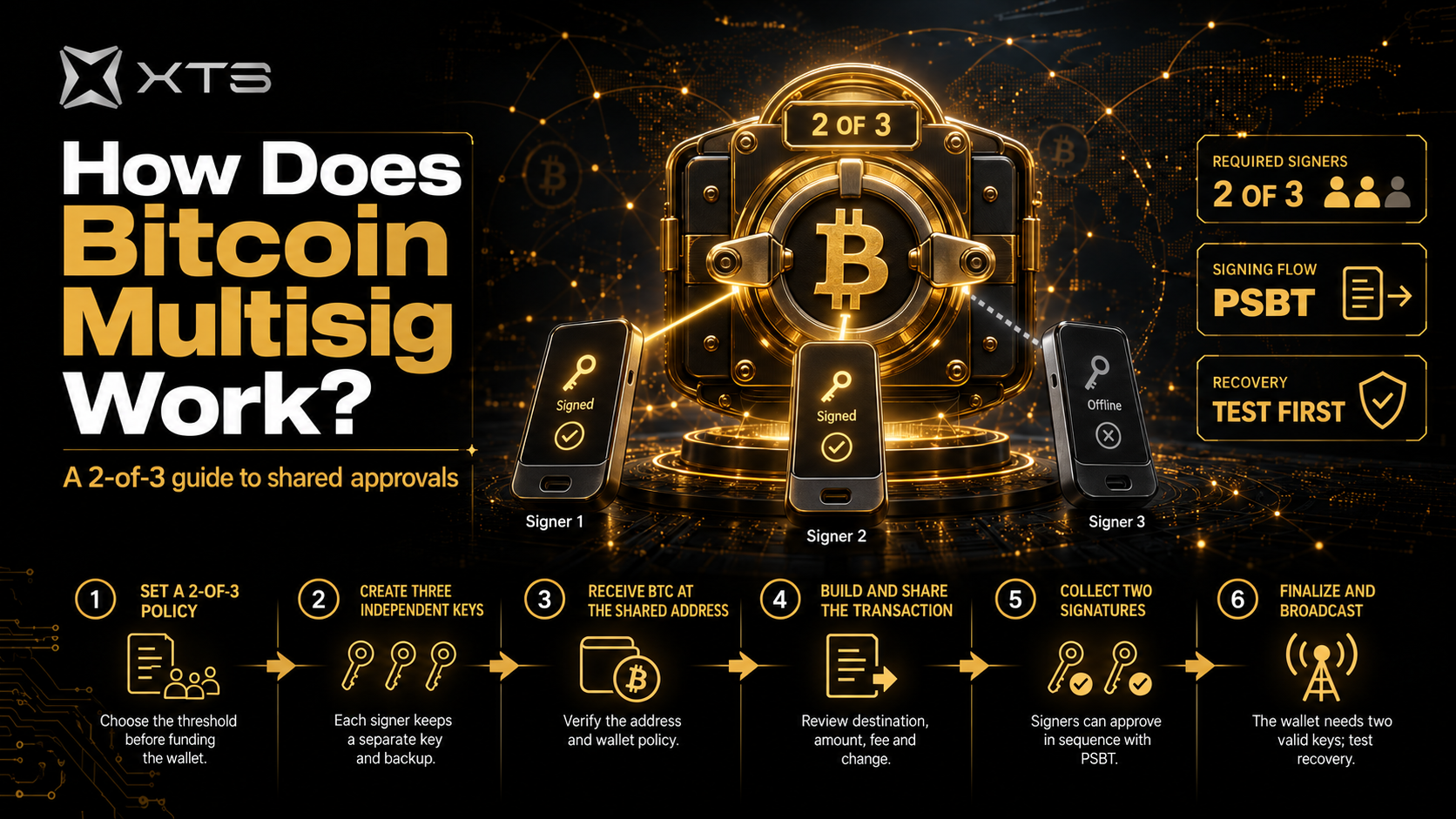
    A multisignature wallet may require several independent backups plus information about cosigners, key origins, derivation paths, and the spending policy. A single participant’s phrase may restore only one key, not the full wallet arrangement. Output descriptors or a wallet configuration file may be necessary.

    Custodial Accounts

    An exchange or custodial service may control the private keys on the user’s behalf. In that case, the user may have an account password and recovery process but no personal seed phrase for the on-chain wallet.

    How to Create a Seed Phrase Safely

    Use reputable, authentic wallet software or a genuine hardware signing device.

    Allow the wallet to generate the phrase from secure randomness; do not choose the words yourself.

    For high-value self-custody, prefer a setup that keeps secret generation and signing away from a general-purpose online computer.

    Confirm each word and its position on the trusted device when the wallet provides that check.

    Never use a phrase printed in product packaging, supplied by a seller, sent by support, or found online.

    Start with a small amount and verify the receive, backup, and recovery process before relying on a new setup.

    How to Back Up a Seed Phrase

    A backup plan should address theft, fire, water, fading ink, accidental disposal, coercion, incapacity, and the risk that heirs cannot interpret the setup. There is no single storage method that fits every person, location, or value level.

    Keep the Default Backup Offline

    For most individuals, the safest default is to write the words clearly on durable material and keep the backup offline. Paper is inexpensive but vulnerable to water, fire, fading, and physical damage. Metal backups can improve environmental resistance but still require privacy and secure storage.

    Avoid Casual Digital Copies

    Screenshots, phone photos, email drafts, cloud notes, ordinary documents, printers, and unencrypted online storage create additional copies that malware, account compromise, backups, or service providers may expose. Specialist encrypted backup systems exist, but they require careful design and should not be treated as equivalent to saving words in a normal password field.

    Use More Than One Failure Domain

    Two copies in the same drawer may both be lost in one event. Multiple secure locations can improve resilience, but each additional copy also creates another theft opportunity. The locations, access rules, and inheritance plan should be chosen as one coherent system.

    Do Not Invent an Informal Split

    Dividing words between people or locations without a tested scheme can create confusing, fragile recovery. Purpose-built multisignature, SLIP39, Codex32, or other threshold backup approaches may be appropriate for advanced users, but they are different systems with their own compatibility and recovery requirements.

    How to Test a Wallet Backup

    A backup that has never been tested is only an assumption. Many reputable hardware wallets provide a device-based recovery check that verifies the words without exposing them to a computer. Users should follow the manufacturer’s official process.

    Record the wallet type, backup format, word count, and whether an optional passphrase is used.

    Verify the words in the exact order through the wallet’s trusted recovery-check feature.

    Confirm that the expected accounts or receive addresses can be reproduced.

    If performing a full restoration, use a trusted clean device and avoid entering the phrase into websites or support forms.

    Test with a small amount before depending on the setup for significant funds.

    Document any additional information required for multisig, descriptors, derivation paths, or inheritance without exposing secrets unnecessarily.

    Never test recovery by entering valuable recovery words into a random website, browser extension, spreadsheet, AI chatbot, or unfamiliar wallet. A fake ‘validator’ can transmit the phrase immediately.

    What Happens If a Seed Phrase Is Lost?

    Losing a written backup does not immediately move the Bitcoin if a working wallet still controls the keys. The user may be able to create a new wallet with new recovery material and transfer the funds while access remains available.

    If the device fails and the only valid recovery material is gone, the relevant Bitcoin may become permanently inaccessible. The Bitcoin network has no password-reset desk and cannot recreate unknown private keys.

    What Happens If a Seed Phrase Is Exposed?

    A photographed, typed, shared, copied, or discovered seed phrase should be treated as compromised. Deleting the photo or changing a wallet password does not change the private keys already derived from the exposed material.

    If the legitimate owner still has access, the normal response is to create a completely new wallet with freshly generated recovery material and transfer the funds to addresses controlled only by the new wallet. The transfer should be planned carefully, especially for large balances, multisignature setups, or suspected active theft.

    Common Seed Phrase Scams

    Fake customer support asks for the phrase to ‘verify’ or ‘synchronize’ a wallet.

    A phishing website claims that a wallet must be restored, upgraded, or validated.

    A fake browser extension or mobile app requests recovery words during setup.

    Malware presents a convincing wallet interface but sends the phrase to an attacker.

    A seller provides a hardware wallet that is already initialized with known words.

    A giveaway, airdrop, tax form, compliance check, or investment service asks for the phrase.

    Someone offers to recover funds and requests the complete phrase before proving legitimacy.

    A legitimate helper can explain a recovery process without learning the recovery words. The phrase should be entered only into a trusted wallet recovery flow that the user intentionally initiated.

    Common Backup Mistakes

    Writing the words without numbering their positions.

    Storing the only copy beside the device it is meant to replace.

    Taking a photo that automatically uploads to cloud storage.

    Forgetting that a BIP39 passphrase is part of the recovery material.

    Translating words or correcting them to more familiar spellings.

    Assuming any wallet that accepts 12 or 24 words will restore the same accounts.

    Keeping a multisig seed but losing the wallet policy, cosigner information, or descriptor.

    Never testing the backup before a device is lost.

    Relying only on memory or on one person who may become unavailable.

    Common Misconceptions About Seed Phrases

    ‘The Seed Phrase Is Stored on the Blockchain.’

    No. The blockchain records transactions and spendable outputs. The phrase is private recovery material created and stored by the wallet user or device.

    ‘Twelve Words Are Just Twelve Password Words.’

    No. A properly generated mnemonic encodes computer-generated entropy and a checksum. The security comes from the random generation process, not from the everyday appearance of the words.

    ‘A Longer Phrase Fixes Every Security Problem.’

    No. More entropy does not protect against phishing, malware, a photographed backup, an exposed passphrase, weak device verification, or an attacker who obtains the complete recovery material.

    ‘My Wallet PIN Can Recover the Wallet.’

    Usually no. A PIN protects local device access. Recovery normally depends on the phrase and any other required wallet information.

    ‘Support Can Reset My Seed Phrase.’

    No self-custody wallet provider or Bitcoin network operator can reset unknown private recovery material. Anyone promising a reset while asking for the words should be treated with extreme caution.

    The XTS Perspective

    At XTS, we view the seed phrase as the bridge between Bitcoin’s cryptographic independence and a human recovery process. It gives a user the ability to rebuild a deterministic wallet without asking a bank or platform for permission, but it also transfers meaningful security responsibility to that user.

    Good education should go beyond the slogan ‘never share your seed.’ Users also need to understand which wallet created the backup, whether BIP39 or another format is involved, whether a passphrase exists, which policies and derivation details matter, and how recovery will work if the original device is unavailable.

    Self-custody is not measured by owning a metal plate or a hardware device. It is measured by whether the complete system can resist realistic threats and still be recovered accurately when needed.

    Frequently Asked Questions (FAQ)

    How many words are in a Bitcoin seed phrase?

    BIP39 supports 12, 15, 18, 21, and 24 words. Many consumer wallets use 12 or 24, while other backup standards may use different lengths.

    Is a 24-word phrase always better than 12 words?

    A properly generated 12-word BIP39 phrase already represents 128 bits of entropy. Twenty-four words represent more entropy, but practical safety also depends on device quality, backup protection, passphrase handling, and recovery discipline.

    Can someone steal Bitcoin with only the seed phrase?

    For a standard wallet without an additional passphrase or policy requirement, the phrase may be sufficient to recreate the private keys and spend the funds. Complex wallets may require more information, but exposure should always be treated seriously.

    Can I change my seed phrase?

    A wallet cannot normally change the existing root recovery material in place. To replace a compromised or unsuitable phrase, create a new wallet with new recovery material and transfer the funds.

    Can I recover a wallet without the seed phrase?

    Possibly, if a working device, wallet file, individual private keys, or another authorized recovery method remains available. If every signing key and recovery method is lost, the Bitcoin network cannot restore access.

    Is a seed phrase the same as a private key?

    No. A seed phrase can recreate a wallet seed from which many private keys may be derived. A private key usually controls a particular key-based spending condition.

    Can I store a seed phrase in a password manager?

    That choice changes the threat model and creates a digital copy. Most hardware-wallet guidance recommends an offline backup. Advanced encrypted systems require careful independent evaluation and should not be used casually.

    What if I enter the wrong BIP39 passphrase?

    The wallet will normally derive a different valid wallet rather than report a simple error. Exact characters and capitalization matter, so an apparently empty wallet may indicate a passphrase or derivation mismatch.

    Can I translate my seed phrase into another language?

    No. Preserve the original words and order. Translating or replacing words changes the data and can produce a different or invalid backup.

    Does a seed phrase recover wallet labels and transaction notes?

    Usually not. It primarily restores deterministic keys. Labels, contacts, notes, account names, descriptors, and policy data may require separate backups depending on the wallet.

    Conclusion

    A Bitcoin seed phrase is a compact human-readable backup for a deterministic wallet. In the common BIP39 process, securely generated entropy and a checksum become ordered words, those words and any optional passphrase become a binary seed, and the wallet derives a hierarchy of private and public keys.

    The apparent simplicity of the words should not hide the complexity of recovery. Compatibility, derivation paths, script types, wallet policies, passphrases, multisignature arrangements, and metadata can all matter. The safest backup is not merely one that survives storage; it is one that can be restored correctly without exposing the keys to an attacker.

    Understanding recovery phrases helps users make better decisions about wallets, hardware devices, custody, inheritance, and operational security. In Bitcoin, recovery planning is part of ownership.

    Key Takeaways

    • A seed phrase is ordered recovery material used by many deterministic wallets.
    • BIP39 converts 128 to 256 bits of entropy plus a checksum into 12 to 24 words.
    • The mnemonic and optional passphrase produce a 512-bit seed under BIP39.
    • A seed phrase can derive many private keys; it is not the same as one private key.
    • Wallet passwords and device PINs protect local access but do not replace recovery words.
    • The correct words may still require the right passphrase, wallet format, derivation path, script type, or descriptor.
    • Never invent, translate, photograph, casually digitize, or share recovery words.
    • Test backups through a trusted wallet process before relying on them.
    • If a phrase is exposed, move funds to a newly generated wallet rather than changing only the app password.
    • Multisignature and advanced wallets may require additional policy and cosigner backups.
  • Public Key vs Private Key: Understanding Bitcoin’s Cryptographic Keys | XTS Insights

    A complete beginner-friendly guide to Bitcoin private keys, public keys, addresses, signatures, seed phrases, extended keys, Taproot, and secure key management.

    Introduction

    Bitcoin allows people to transfer value without asking a bank or payment company to approve each transaction. That independence depends on a cryptographic key system that proves spending authority without requiring the owner to reveal a secret to the network.

    Two terms sit at the center of this system: the private key and the public key. They are mathematically connected, but they serve very different purposes. A private key must remain secret and is used to authorize spending. A public key can be shared and is used by Bitcoin nodes to verify a valid signature.

    The relationship is easy to summarize but often explained too loosely. A Bitcoin address is not the same as a public key. A seed phrase is not one individual private key. A wallet password does not replace the underlying key material. An extended public key cannot normally spend funds, yet it can expose significant financial privacy.

    At XTS, we believe these distinctions are essential for understanding Bitcoin wallets, transaction verification, self-custody, hardware wallets, multisignature arrangements, Taproot, and secure recovery. This guide explains the entire relationship in clear language while preserving the technical details that matter.

    The Short Answer

    A Bitcoin private key is secret data used to create spending signatures. The corresponding public key is derived from that private key and allows the network to verify those signatures. The public key cannot feasibly be reversed to recover the private key when secure cryptography is used correctly.

    The simplest model is private key → public key → address or spending condition. In practice, modern Bitcoin wallets may derive many key pairs from one seed and combine them with script templates, descriptors, multisignature policies, or Taproot output keys.

    What Are Cryptographic Keys in Bitcoin?

    A cryptographic key is data used by an algorithm to perform a security function. Bitcoin uses asymmetric public-key cryptography: the signing key is private, while the verification key can be public.

    This arrangement allows a wallet to prove authorization without giving Bitcoin nodes the secret itself. The wallet creates a signature for specific transaction data. Nodes verify the signature against the appropriate public key and the spending rules of the output being spent.

    Cryptographic control is not always identical to legal ownership. From the protocol’s perspective, the central question is whether a transaction satisfies the output’s spending conditions. For common single-key outputs, that normally means providing a valid signature created with the corresponding private key.

    What Is a Bitcoin Private Key?

    A Bitcoin private key is a secret number chosen from the valid range defined by the secp256k1 elliptic curve. It is commonly represented as 32 bytes of data, although users may encounter encoded forms such as Wallet Import Format, or WIF.

    The raw number is not Bitcoin itself. It is secret signing material. Wallet software uses it to create a valid digital signature for a transaction. The signature can be shared with the network while the private key remains hidden.

    Anyone who obtains usable private-key material may be able to authorize spending of the outputs controlled by it. Private keys should never be shared with support agents, entered into untrusted websites, sent through messaging apps, or stored casually in screenshots and cloud notes.

    How Is a Private Key Generated?

    A secure private key must be generated from strong, unpredictable randomness. The possible key space is extraordinarily large, which makes accidental duplication effectively negligible when reputable software and hardware generate keys correctly.

    Human-created phrases, birthdays, favorite numbers, or predictable patterns are not safe sources of private keys. So-called brainwallets have historically failed because attackers can guess human choices far more efficiently than they can search the full cryptographic key space.

    Use established wallet software or hardware from an authentic source.

    Allow the wallet to generate entropy using its documented process.

    Do not invent a private key or recovery phrase yourself.

    Verify backups before relying on the wallet for significant value.

    Treat imported legacy keys with extra caution because their origin may be uncertain.

    What Is Wallet Import Format (WIF)?

    Wallet Import Format is a Base58Check encoding of a private key. It includes version information and a checksum that helps software detect some copying errors. It may also indicate that the key should be used with a compressed public key.

    WIF is an encoding, not encryption. Anyone who sees a valid WIF private key can decode it and may be able to spend the associated funds. Its readable appearance does not make it safer to publish or store online.

    What Is a Bitcoin Public Key?

    A Bitcoin public key is an elliptic-curve point derived mathematically from a private key. Traditional Bitcoin keys use the secp256k1 curve. Wallet software can calculate the public key efficiently from the private key, but reversing that operation is considered computationally infeasible with current methods.

    The public key helps verify digital signatures. When a wallet signs transaction data, Bitcoin nodes use the relevant public key and signature rules to confirm that the transaction was authorized by someone possessing the corresponding private key.

    A standard public key is not secret. However, public information can still affect privacy. Sharing one public key repeatedly can help observers link activity, and sharing an extended public key can reveal an entire branch of addresses and transactions.

    How Is the Public Key Derived?

    In simplified form, the public key is calculated by multiplying the private key by a fixed generator point on the secp256k1 elliptic curve. This operation is fast in the forward direction.

    Private key × generator point = public key

    The reverse problem—finding the private key from the public key—is the elliptic-curve discrete logarithm problem. The security assumption is not that reversal is logically impossible, but that it requires an impractical amount of computation when keys are generated and used correctly.

    Why Can the Public Key Be Shared?

    A public key is designed to verify signatures, not create them. Knowing it does not normally provide the secret value required to authorize spending. This lets a network of independent nodes verify a transaction without learning the private key.

    Public does not mean consequence-free. Publishing a public key can connect it to an identity, and address reuse can make separate payments easier to link. Extended public keys deserve even greater care because they can reveal many future addresses and transaction relationships.

    Public Key vs Private Key

    Private Key

    Must remain secret.

    Creates digital signatures that authorize spending.

    Can derive the corresponding public key.

    Loss may make funds permanently inaccessible if no valid backup exists.

    Exposure may allow an attacker to transfer funds.

    Public Key

    Can be shared for verification and wallet coordination.

    Verifies signatures but cannot normally create them.

    Is derived from the private key through elliptic-curve mathematics.

    May be used directly or indirectly in Bitcoin spending conditions.

    Can reveal privacy information, especially when extended or reused.

    Private keys authorize. Public keys verify.

    How a Bitcoin Signature Works

    A wallet constructs a transaction and identifies the inputs that require authorization.

    The wallet calculates the exact transaction data that the signature must commit to.

    The signing device uses the relevant private key to create a digital signature.

    The signed transaction is broadcast without exposing the private key.

    Bitcoin nodes use public information and the spending script to verify the signature.

    If every rule is satisfied, nodes may accept the transaction into their mempools and miners may confirm it in a block.

    A signature is tied to specific transaction data and signature-hash rules. If important committed details are changed after signing, the signature will not verify for the modified transaction.

    What Is a Digital Signature?

    A digital signature is cryptographic proof that the required secret key authorized particular data. It does not reveal the private key, and it is not a scanned handwritten signature.

    Bitcoin signatures support two essential properties: only the appropriate secret key should be able to produce a valid signature, and anyone with the necessary public information should be able to verify it. Correct wallet implementation is important because poor randomness or flawed signing can undermine otherwise strong cryptography.

    ECDSA and Schnorr Signatures

    ECDSA

    Bitcoin traditionally uses the Elliptic Curve Digital Signature Algorithm, or ECDSA, with secp256k1 keys. Many legacy and SegWit outputs continue to use ECDSA signatures.

    Schnorr

    Taproot introduced BIP340 Schnorr signatures for key-path spending. BIP340 uses 32-byte x-only public keys and fixed-size 64-byte signatures. Schnorr’s mathematical properties also support more efficient constructions for multiple signers and improved privacy in suitable protocols.

    ECDSA and Schnorr use the same underlying secp256k1 curve but different signature rules and encodings. A beginner does not need to calculate either manually; secure wallet software handles the details.

    Compressed and X-Only Public Keys

    An elliptic-curve public key represents a point with X and Y coordinates. Older uncompressed encodings contain both coordinates and use 65 bytes. Compressed encodings store the X coordinate plus one bit of information needed to reconstruct Y, reducing the key to 33 bytes.

    Compressed public keys became the standard choice for traditional Bitcoin uses because they reduce transaction data without losing the underlying point. BIP340 Schnorr signatures use a different 32-byte x-only encoding that selects a consistent Y-coordinate convention.

    Private Key, Public Key, and Bitcoin Address

    Private key → public key → address or spending script

    This is a useful beginner diagram, but it is a simplification. A Bitcoin address is a user-facing encoding that helps the sender create a particular output script. It is not the same as the private key, and it is not always simply a public key written in another format.

    Legacy P2PKH and native SegWit P2WPKH destinations commit to a hash of a public key; the public key is usually revealed when the output is later spent. Taproot P2TR addresses encode a witness version and a 32-byte output key. Script-hash and multisignature arrangements may commit to more complex conditions involving several keys.

    What Is a Bitcoin Address?

    A Bitcoin address is a shareable destination that encodes information needed to construct an output. Common mainnet addresses begin with 1, 3, or bc1, depending on the script type and encoding.

    A wallet can generate many addresses from one root seed. Using a fresh receiving address for each payment generally improves privacy. Sharing an address is normal; sharing the private key or recovery phrase behind the wallet is not.

    Does an Address Reveal the Public Key?

    The answer depends on the output type and whether it has been spent. For P2PKH and P2WPKH, the address represents a hash of a public key, and the full public key is normally revealed in the spending transaction. An unspent output of those types may therefore expose only the hash commitment.

    Taproot outputs are different because the address commits directly to an x-only output key. Other scripts can reveal different combinations of public keys and script data. In every case, seeing the public key should still not make calculating the private key practical under current security assumptions.

    What Is a Seed Phrase?

    A seed phrase, mnemonic phrase, or recovery phrase is a human-readable backup used by many deterministic wallets. It can recreate a seed from which the wallet derives many private and public keys.

    A seed phrase is therefore not merely one private key. Depending on the wallet standard and derivation structure, it may regenerate an entire tree of accounts, receiving keys, and change keys. BIP39 is widely deployed, often with 12 or 24 words, but not every wallet uses BIP39.

    The words, their order, the derivation method, script type, and any additional passphrase may all matter. Users should follow the exact recovery instructions for their wallet and never assume that every word-based backup is interchangeable.

    Private Key vs Seed Phrase

    Private Key

    A single private key usually controls one corresponding public key and the outputs that require it. Importing an individual key may not restore the rest of a wallet, its labels, other addresses, or future derivation information.

    Seed Phrase

    A seed phrase often backs up the root of a deterministic wallet and can regenerate many keys. Because it may expose an entire wallet, it must be protected at least as carefully as the private keys derived from it.

    What Are Extended Keys?

    BIP32 hierarchical deterministic wallets combine a key with a chain code to create extended keys. An extended private key can derive a branch of child private and public keys. An extended public key can derive non-hardened child public keys without revealing the corresponding private keys.

    Extended Private Key (xprv)

    An extended private key can expose every descendant key in its branch. It must remain secret and should be treated as highly sensitive recovery material.

    Extended Public Key (xpub)

    An extended public key normally cannot spend funds, but it can allow software to generate addresses and monitor transactions across a wallet branch. Publishing it can reveal balances, transaction history, address relationships, and future receiving activity.

    BIP32 also identifies a more advanced risk: possession of a parent extended public key together with a leaked non-hardened descendant private key can compromise the parent private branch. Hardened derivation is used to create boundaries against this class of exposure.

    How HD Wallets Use Key Pairs

    The wallet starts with a securely generated root seed.

    It derives a master extended private key and corresponding extended public information.

    Defined derivation paths create account, receiving, and change branches.

    Each child private key produces a matching child public key.

    Addresses or output scripts are created from the required public keys and policy.

    The root recovery information can reconstruct the wallet when the same standards and configuration are used.

    This design lets an online watch-only system generate fresh addresses from public information while an offline signer retains the private keys. It improves operational separation, but backup compatibility and xpub privacy still require care.

    How Hardware Wallets Protect Private Keys

    A hardware wallet is a dedicated signing device designed to keep private keys isolated from an ordinary internet-connected computer. A companion application prepares transaction data, while the device displays important details and creates the signature internally after approval.

    The private key is not supposed to leave the signing environment. However, the user must still protect the recovery backup, buy authentic hardware, verify addresses on the device screen, update carefully, and avoid approving a malicious transaction.

    Watch-Only Wallets and Public Keys

    A watch-only wallet tracks addresses, balances, and transactions without holding the private keys required to spend. It may use individual public keys, extended public keys, scripts, or output descriptors.

    Watch-only systems are useful for auditing, payment processing, and offline signing. They reduce direct theft risk on the monitoring device, but they can still expose financial privacy and must receive authentic public information from the correct wallet.

    Multisignature and Multiple Keys

    Not every Bitcoin output is controlled by one private key. A multisignature policy can require several signatures, such as two out of three authorized keys. This can reduce dependence on one device or person and support shared control.

    Multisignature also increases operational complexity. A complete recovery plan may require seed backups, cosigner public keys, the script policy, derivation paths, and descriptors. Preserving only one seed phrase may not be enough to reconstruct the arrangement.

    Who Controls the Private Key?

    Non-Custodial Wallet

    In a non-custodial setup, the user or a signing arrangement chosen by the user controls the keys needed to spend. This provides independence but creates direct responsibility for backup, device security, authentication, and recovery.

    Custodial Service

    A custodian usually controls the on-chain private keys and records customer balances internally. The customer depends on the custodian’s security, solvency, policies, access controls, and legal environment.

    Controlling an account login is not always the same as controlling the on-chain private keys.

    What Happens If a Private Key Is Lost?

    If the only private key and every valid recovery method are lost, the associated Bitcoin may remain recorded on the blockchain but become practically unspendable. Bitcoin has no central administrator who can reset the key.

    Losing a phone or hardware wallet is not necessarily fatal if a complete compatible backup survives. Losing both the signing device and the only recovery information can cause permanent loss of access.

    What Happens If a Private Key Is Stolen?

    A stolen private key should be treated as a critical compromise. An attacker may be able to sign and broadcast a transaction without the original device or the owner’s permission.

    If the affected user still has access, the normal response is to create a secure wallet with entirely new key material and move funds as safely and promptly as circumstances permit. Changing an app password does not make an exposed private key safe again.

    Does a Wallet Password Protect the Private Key?

    A wallet password or device PIN may protect local access to a wallet file, application, or signing device. It can reduce risk if the encrypted device is stolen, but it does not replace the key or recovery backup.

    If an attacker already has the seed phrase or raw private key, changing the local password does not change the compromised secret. Likewise, a password alone may not restore the wallet after device failure.

    Key Reuse and Bitcoin Privacy

    Reusing the same public key or address makes payments easier to link. It can connect customers, balances, and transaction history even when a real name is not written on the blockchain.

    Use a fresh receiving address for each payment when practical.

    Avoid publishing extended public keys or complete wallet address lists.

    Understand which addresses a watch-only service or backend can observe.

    Preserve labels and wallet metadata without exposing them publicly.

    Remember that Bitcoin is pseudonymous, not automatically anonymous.

    Essential Private-Key Security Practices

    Never share a private key, seed phrase, extended private key, or recovery file.

    Generate keys with reputable software or hardware and strong randomness.

    Keep recovery information offline and protected from theft and physical damage.

    Verify recipient addresses and amounts on a trusted display before signing.

    Use strong device security and authentic wallet software.

    Start with a small test transaction when using a new wallet or recovery setup.

    Separate everyday spending keys from long-term savings when appropriate.

    For large or shared holdings, consider a carefully designed multisignature or professional custody arrangement.

    Create a tested inheritance and emergency-recovery plan.

    Common Misconceptions About Bitcoin Keys

    ‘A Bitcoin address is a public key.’

    Not always. An address encodes information for constructing an output script. Some address types commit to a public-key hash, while Taproot addresses commit to an output key and script-hash addresses can represent more complex conditions.

    ‘A seed phrase is one private key.’

    Usually false. In many deterministic wallets, the seed phrase recreates a seed from which an entire tree of private and public keys is derived.

    ‘A public key can spend Bitcoin.’

    A public key verifies a signature but does not normally create one. Spending requires satisfying the output conditions, often with a signature produced by the corresponding private key.

    ‘WIF encrypts a private key.’

    False. WIF is an error-resistant encoding with version information and a checksum. It can be decoded and must remain secret.

    ‘A wallet password can recover every wallet.’

    No. A password may unlock a local wallet, while recovery can depend on a seed phrase, private keys, descriptors, derivation paths, cosigner data, or a custodian’s account process.

    ‘Sharing an xpub has no risk because it cannot spend.’

    An xpub usually cannot spend by itself, but it can reveal a large branch of wallet addresses and transaction history. Some key-derivation exposures also make extended-key handling more sensitive than ordinary public-key sharing.

    XTS Perspective

    At XTS, we view public-key cryptography as the bridge between personal authorization and decentralized verification. Private keys allow a holder to create valid signatures; public keys allow thousands of independent Bitcoin nodes to check those signatures without receiving the secret.

    The most important practical lesson is not simply ‘never share your key.’ Users should understand which secret protects a single output, which backup can recreate an entire wallet, who controls the on-chain signing authority, what an extended public key reveals, and what information is required for recovery.

    Strong cryptography cannot compensate for weak key generation, phishing, careless backups, malicious transaction approval, or misunderstood custody. Education turns abstract mathematics into safer everyday decisions.

    Frequently Asked Questions (FAQ)

    What is the difference between a public key and a private key?

    A private key is secret signing material used to authorize spending. A public key is derived from it and is used to verify signatures.

    Can someone calculate my private key from my public key?

    With correctly generated secp256k1 keys and current methods, deriving the private key from the public key is considered computationally infeasible.

    Is a Bitcoin address the same as a public key?

    No. An address is an encoding that helps create an output script. Depending on its type, it may represent a public-key hash, script hash, or Taproot output key.

    Can I share my public key?

    A standard public key is not a spending secret, but sharing or reusing it can reduce privacy. Extended public keys should be shared only when their monitoring and privacy implications are understood.

    Can I share my Bitcoin address?

    Yes. Addresses are designed to be shared for receiving payments. Use a fresh address when practical and verify it through a trusted channel.

    What happens if someone gets my private key?

    They may be able to spend the associated funds. Treat the key as compromised, create fresh key material, and move funds safely if access remains.

    Is a seed phrase the same as a private key?

    Not usually. A seed phrase often recreates a seed that derives many private keys. It can expose an entire wallet rather than one key.

    What is the difference between xpub and xprv?

    An xprv is an extended private key that can derive descendant private keys. An xpub derives non-hardened descendant public keys and can monitor activity but normally cannot spend by itself.

    Do Taproot addresses use public keys?

    A Taproot P2TR address commits to a 32-byte x-only output key. Spending can occur through a valid key-path signature or, when committed, a revealed script path.

    Can Bitcoin keys be reset?

    There is no central Bitcoin password-reset authority. A wallet can move funds to newly generated keys if the old keys still work, but lost keys cannot be reset by the network.

    Conclusion

    Bitcoin’s key system makes decentralized authorization possible. A private key creates signatures and must remain secret. The corresponding public key lets the network verify those signatures without learning the private key.

    The simple private-key-to-public-key relationship sits inside a broader wallet system. Addresses encode spending destinations, seed phrases may recreate many keys, extended keys support hierarchical wallets, hardware devices isolate signing, and multisignature policies can distribute authority across several keys.

    Understanding these distinctions helps users protect backups, evaluate custody, preserve privacy, and recover wallets correctly. The mathematics is powerful, but secure Bitcoin use ultimately depends on careful key management.

    Key Takeaways

    • A private key is secret data used to authorize spending signatures.
    • A public key is mathematically derived from a private key and verifies signatures.
    • Deriving a private key from a correctly generated public key is considered computationally infeasible.
    • A Bitcoin address is not identical to a private key or always identical to a public key.
    • ECDSA is widely used in Bitcoin; Taproot key-path spending uses BIP340 Schnorr signatures.
    • Seed phrases often restore entire deterministic key trees, not one key.
    • Extended private keys can expose a wallet branch; extended public keys can expose privacy.
    • Hardware wallets isolate signing but do not remove backup, phishing, or user-error risks.
    • Lost keys may make Bitcoin inaccessible, while stolen keys may allow unauthorized spending.
    • Secure randomness, offline backups, careful verification, and tested recovery are essential.
  • How Do Bitcoin Wallets Work? Understanding Keys, Addresses, and Bitcoin Ownership | XTS Insights

    A beginner-friendly guide to private keys, public keys, Bitcoin addresses, seed phrases, wallet types, transaction signing, backups, and secure Bitcoin ownership.

    Introduction

    A Bitcoin wallet is often described as a digital place where Bitcoin is stored. That explanation is convenient, but it is not technically accurate. Bitcoin does not sit inside a phone, computer, hardware device, or app. The blockchain records spendable transaction outputs, while a wallet manages the information needed to identify and spend the outputs under its control.

    For most users, the wallet is the main interface to Bitcoin. It creates receiving addresses, monitors incoming transactions, calculates balances from UTXOs, constructs outgoing transactions, estimates fees, produces digital signatures, and broadcasts signed transactions to the network.

    The wallet also determines who is responsible for the keys. In a non-custodial wallet, the user controls the key material. In a custodial service, a company usually controls the on-chain keys and records the user’s balance inside its own system.

    At XTS, we believe wallet knowledge is essential because it connects many Bitcoin fundamentals: private keys, public keys, addresses, UTXOs, transaction fees, the mempool, nodes, miners, confirmations, privacy, and personal security.

    The Short Answer

    A Bitcoin wallet is software or hardware that manages keys, addresses, transaction data, and signing. It does not hold Bitcoin like a physical wallet holds cash; it helps a user discover and spend eligible outputs recorded on the blockchain.

    A wallet may also manage backups, generate many addresses from one master seed, communicate with a Bitcoin node or service, and display a human-friendly balance. The exact security model depends on whether the wallet is custodial, non-custodial, online, offline, single-signature, or multisignature.

    What Is a Bitcoin Wallet?

    A Bitcoin wallet can mean a wallet application, a hardware signing device, or the data used by that system. At its core, a wallet organizes the information required to receive Bitcoin and authorize future spending.

    Common wallet functions include:

    Generating private and public key material.

    Creating Bitcoin addresses or payment scripts for receiving funds.

    Watching the blockchain for relevant transactions and UTXOs.

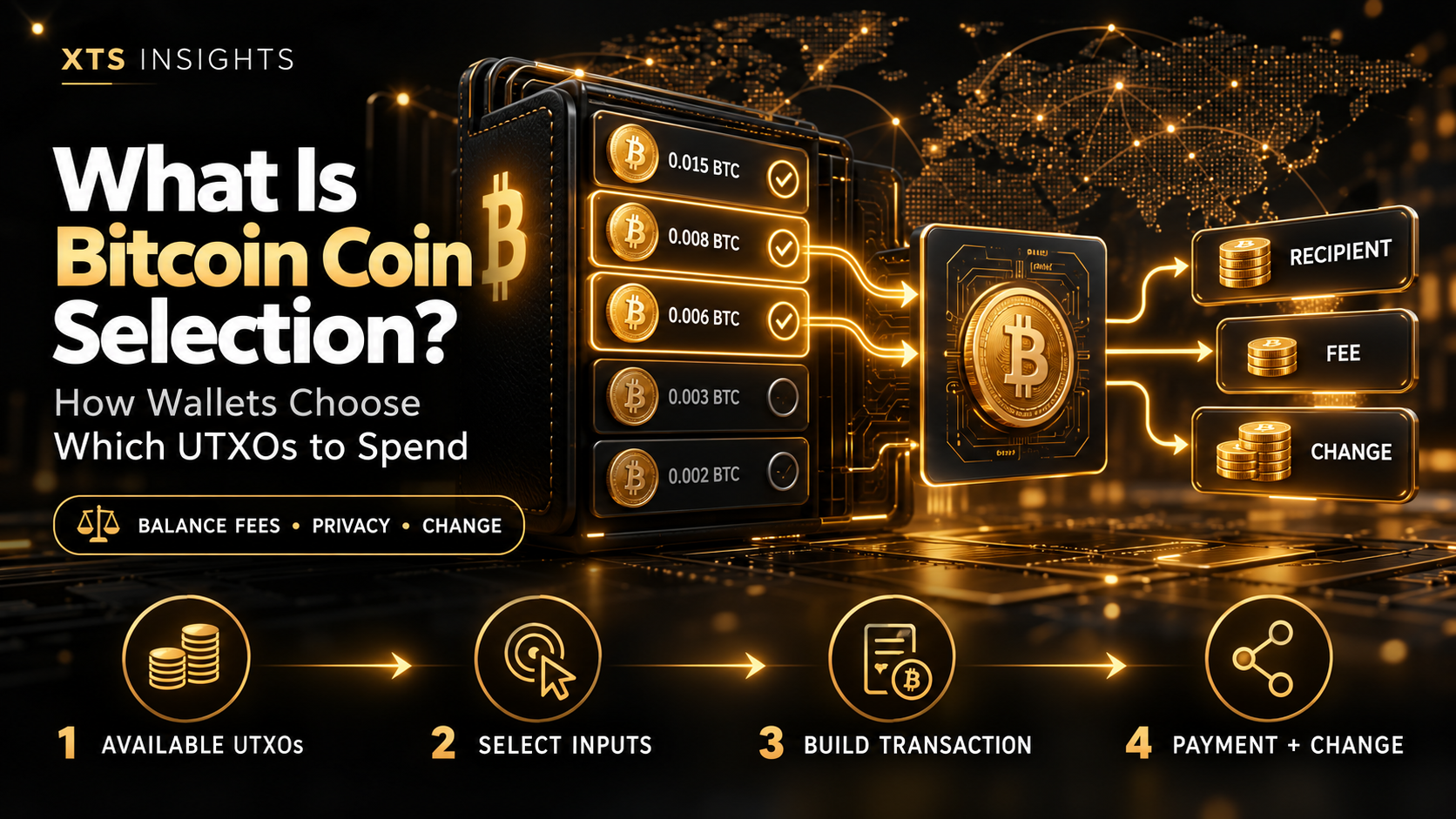
    Selecting UTXOs when constructing a payment.

    Creating recipient and change outputs.

    Estimating transaction fees.

    Signing transactions with the required private keys.

    Broadcasting signed transactions through a node or network service.

    Backing up and restoring wallet data.

    Not every wallet performs every function on the same device. A hardware wallet may keep signing keys offline while a companion app monitors the blockchain and broadcasts transactions. A watch-only wallet can observe balances and create unsigned transactions without having the private keys needed to spend.

    Where Is Bitcoin Actually Stored?

    Bitcoin is not stored as a file inside a wallet. The Bitcoin blockchain contains transaction outputs with spending conditions. Outputs that have not yet been spent are called UTXOs, or Unspent Transaction Outputs.

    A wallet scans or queries blockchain data to identify UTXOs that match the keys, scripts, or descriptors it tracks. It then adds those outputs together to display a balance. When the user pays someone, the wallet creates a transaction that spends selected UTXOs and creates new outputs.

    The phrase ‘owning Bitcoin’ is therefore a useful shorthand. From a protocol perspective, the important question is whether the required spending conditions can be satisfied. In the most common case, control of the relevant private key allows the wallet to produce an acceptable signature. Legal ownership can be a separate question from cryptographic control.

    What Is a Private Key?

    A private key is secret cryptographic data used to authorize spending. Wallet software uses the private key to create a digital signature for a transaction without revealing the key itself.

    Anyone who obtains usable private-key material may be able to spend the associated funds. Private keys should therefore never be shared, posted online, typed into untrusted websites, or stored in ordinary cloud notes.

    Modern wallets usually hide raw private keys from everyday users. Instead, they provide a recovery phrase or another backup method from which many keys can be reconstructed.

    What Is a Public Key?

    A public key is derived mathematically from a private key. It can be used as part of the process for receiving Bitcoin and verifying digital signatures.

    The relationship is designed to work in one direction: a wallet can efficiently derive a public key from a private key, but deriving the private key from the public key is considered computationally infeasible with current methods when the system is used correctly.

    Public keys do not need the same secrecy as private keys, but sharing extended public keys can reveal a large part of a wallet’s transaction history and future addresses. They should still be handled with privacy awareness.

    What Is a Bitcoin Address?

    A Bitcoin address is a user-facing encoding that helps a sender construct the correct output script. It is not the same thing as a private key, and it is not always simply a public key written in another format.

    Different address formats represent different script types. Common mainnet formats include legacy addresses beginning with 1, script-hash addresses beginning with 3, and Bech32 or Bech32m addresses beginning with bc1.

    A wallet can generate many receiving addresses. Using a fresh address for each payment generally improves privacy and makes payment tracking easier. Funds sent to older valid addresses do not disappear; the wallet should continue monitoring them as long as it retains the necessary key and script information.

    How Private Keys, Public Keys, and Addresses Connect

    Private key → public key → address or spending script

    This diagram is a useful beginner model, but modern Bitcoin wallets may use script templates, output descriptors, Taproot keys, multisignature policies, or other structures. An address tells the sender how to create an output; the future spender must later satisfy the conditions encoded by that output.

    The process is not reversible in the ordinary sense. Seeing an address does not reveal its private key. Even after a public key is revealed, the private key should remain infeasible to calculate if secure cryptography and key generation are used.

    How a Bitcoin Wallet Receives Bitcoin

    The wallet derives or selects a receiving address.

    The user shares the address or a payment QR code with the sender.

    The sender’s wallet creates a transaction output using that destination.

    The transaction is broadcast and verified by Bitcoin nodes.

    A miner may include the transaction in a block.

    The receiving wallet detects the relevant output and updates its displayed balance and confirmation status.

    A wallet may display an incoming payment before it is confirmed, but the payment remains unconfirmed until it enters a valid block. The number of confirmations a recipient requires depends on transaction value, context, and risk tolerance.

    How a Bitcoin Wallet Sends Bitcoin

    The user enters or scans the recipient’s address and chooses an amount.

    The wallet selects one or more UTXOs that can fund the payment and fee.

    The wallet creates the recipient output and usually a change output back to the wallet.

    The wallet estimates transaction size and selects a fee rate.

    The user reviews the destination, amount, and fee.

    The required private keys sign the relevant transaction inputs.

    The signed transaction is broadcast through a Bitcoin node or service.

    Nodes verify it, it may enter mempools, and a miner may confirm it in a block.

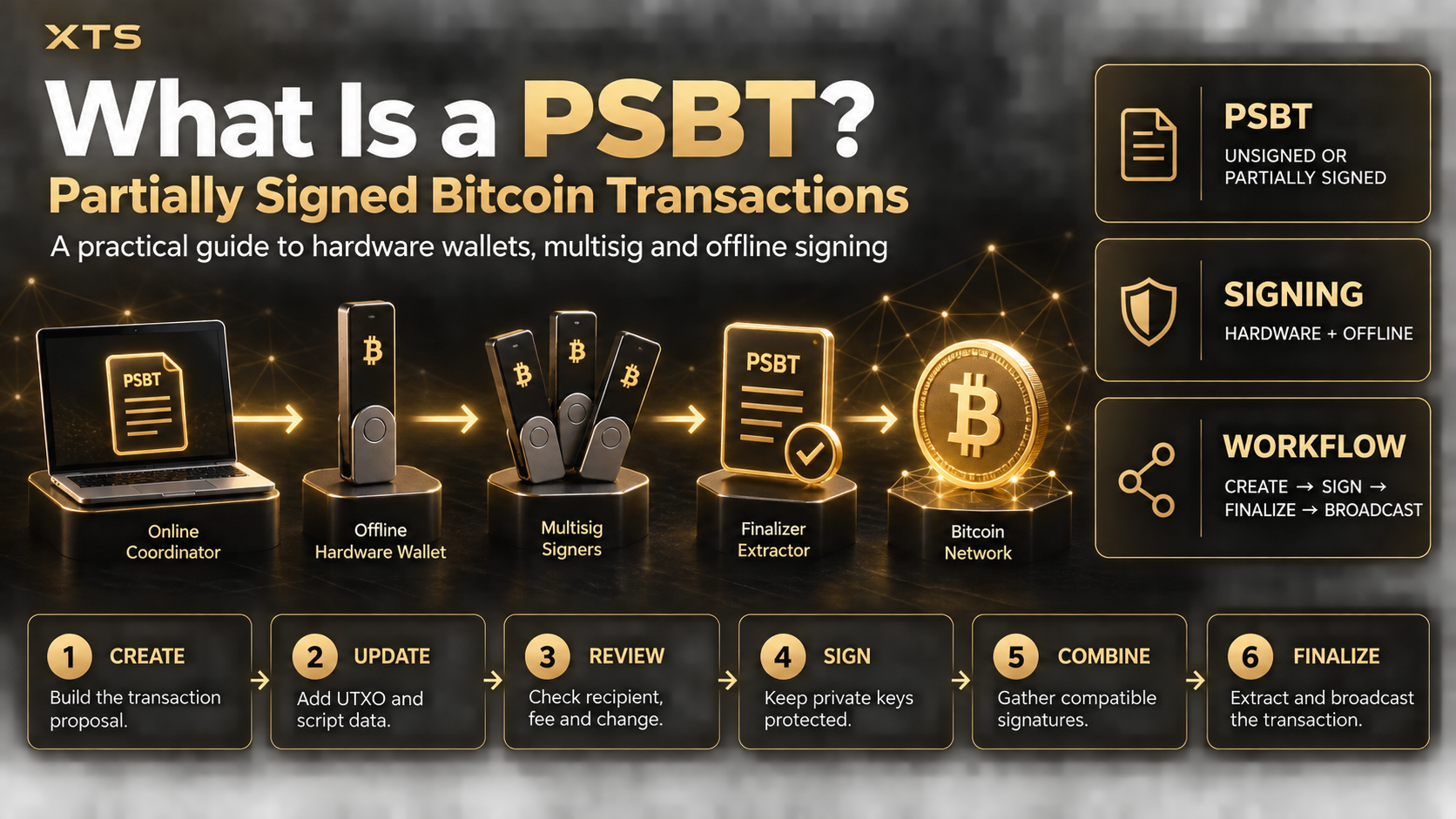
    This process can occur inside one app, or it can be divided between devices. With a hardware wallet, the networked app may build an unsigned transaction, the hardware device may sign after the user reviews it, and the app may then broadcast the signed result.

    What Is a Digital Signature?

    A digital signature proves that the required key authorized a specific transaction. Bitcoin nodes can verify the signature using public information without learning the private key.

    If an attacker changes important transaction details after signing, the signature will no longer be valid for the modified transaction. This helps protect the integrity of the spending authorization.

    What Is a Seed Phrase or Recovery Phrase?

    Many wallets create a sequence of words called a seed phrase, mnemonic phrase, or recovery phrase. It is a human-readable backup used to recreate the wallet’s underlying seed and derive its keys.

    BIP39 is a widely deployed mnemonic standard, commonly using 12 or 24 words, but not every Bitcoin wallet or backup system uses BIP39. Users should follow the exact recovery method documented by their wallet rather than assuming all word lists are interchangeable.

    The words, their order, and any optional passphrase can be essential. Anyone who obtains the complete recovery information may be able to reconstruct the wallet and spend its funds.

    Write the recovery information down accurately and keep it offline.

    Never photograph it or enter it into an untrusted website or form.

    Keep backups protected from theft, fire, water, and accidental disposal.

    Understand whether the wallet uses an additional passphrase.

    Test the recovery process safely before relying on the wallet for significant value.

    What Is an HD Wallet?

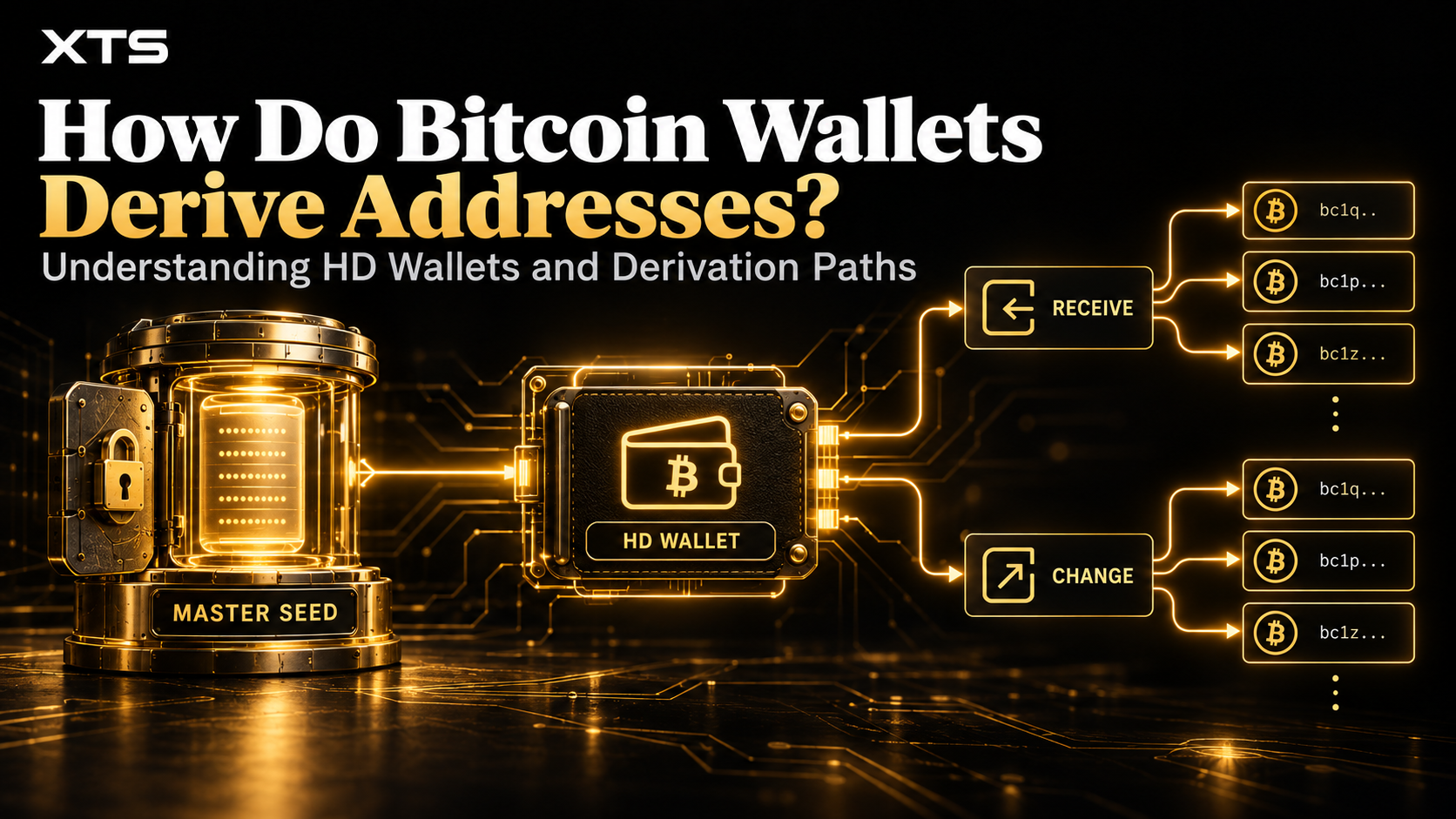
    An HD wallet is a Hierarchical Deterministic wallet. Under standards such as BIP32, a wallet can derive a tree of keys from one seed. This allows it to generate many receiving and change addresses while keeping the wallet recoverable from its root backup.

    HD wallets also make it possible to share selected public information without exposing private keys. For example, a watch-only system can derive addresses and monitor payments from an extended public key, while a separate signing device retains the private material.

    Extended keys deserve careful treatment. An extended private key can expose an entire branch of private keys. An extended public key usually cannot spend funds, but it can reveal addresses, balances, and transaction relationships across a wallet branch.

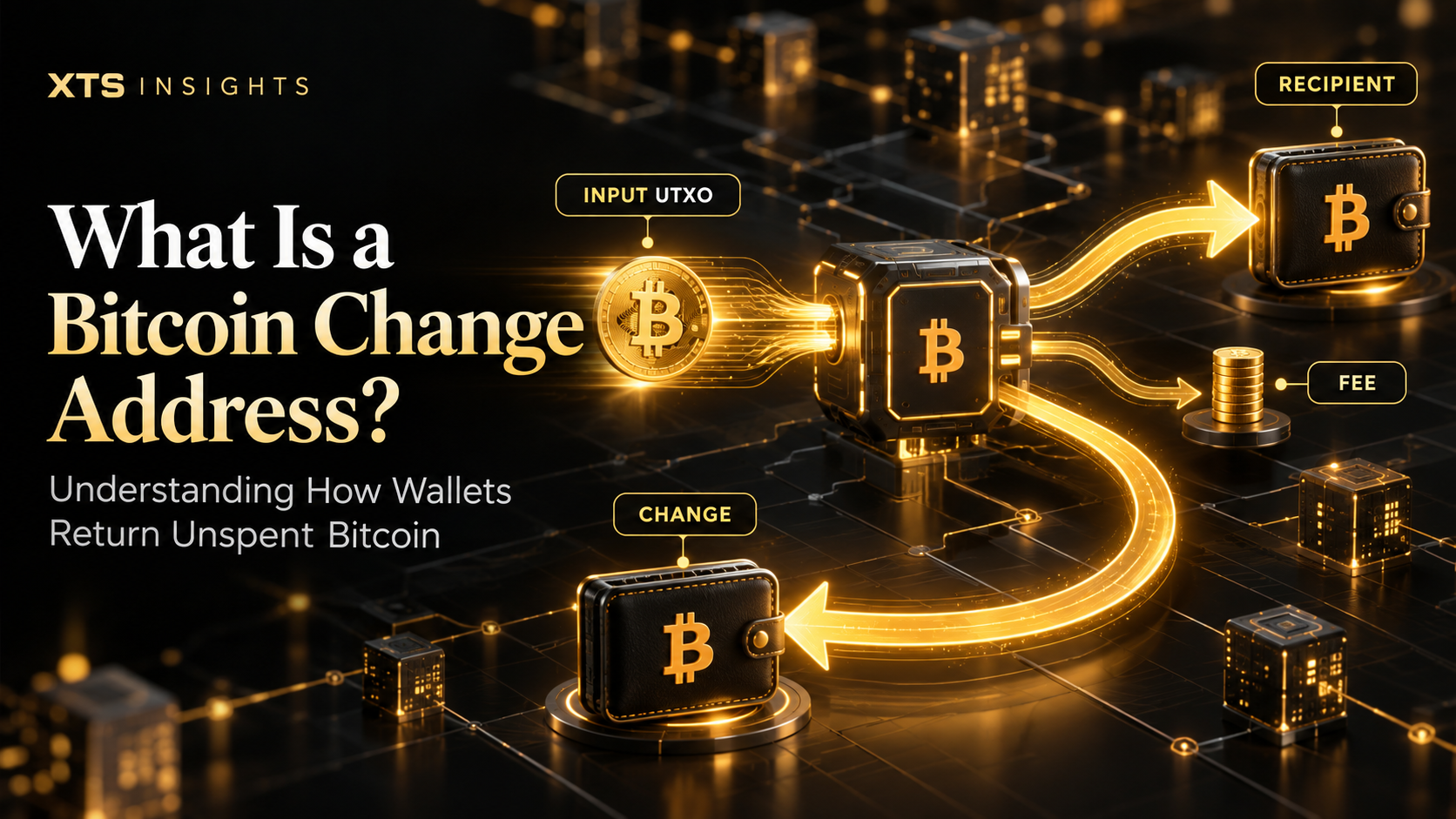
    What Is a Change Address?

    Bitcoin transactions usually spend entire UTXOs. If the selected inputs are worth more than the payment and fee, the wallet creates a change output that returns the remainder to an address controlled by the wallet.

    The change address may be new and may not look familiar to the user. A properly constructed wallet tracks it automatically. Losing the wallet’s key or descriptor data can also mean losing access to change, which is one reason reliable backups and deterministic wallet design matter.

    Custodial vs Non-Custodial Wallets

    Custodial Wallet

    With a custodial service, a company controls the on-chain private keys and maintains an internal account balance for the user. This can simplify recovery and support, but the user depends on the custodian’s security, solvency, policies, access controls, and legal environment.

    Non-Custodial Wallet

    With a non-custodial wallet, the user or an arrangement chosen by the user controls the keys needed to spend. This provides greater independence but also creates direct responsibility for backup, authentication, device security, and recovery.

    Custodial: the service controls the keys. Non-custodial: the user controls the spending authority and recovery responsibility.

    Hot Wallets vs Cold Wallets

    Hot Wallet

    A hot wallet operates on a device connected to the internet. Mobile and desktop wallets are convenient for regular payments, but an online device has a larger attack surface.

    Cold Wallet

    Cold storage keeps private-key material offline or isolated from ordinary internet-connected activity. Hardware wallets and properly designed offline signing systems are common approaches. Cold storage can reduce remote-attack risk, but it does not eliminate physical theft, supply-chain risk, user error, or backup failure.

    Common Types of Bitcoin Wallets

    Mobile Wallets

    Mobile wallets are convenient for everyday use, QR-code payments, and small balances. Security depends on the phone, operating system, wallet design, backup, and user behavior.

    Desktop Wallets

    Desktop wallets can provide advanced features such as coin control, hardware-wallet integration, watch-only accounts, and connection to a personal node. The computer must still be kept secure and updated.

    Hardware Wallets

    A hardware wallet is a dedicated signing device designed to keep private keys isolated. It should display critical transaction details on its own screen so the user can verify the recipient and amount before approving a signature.

    Multisignature Wallets

    A multisignature policy requires more than one key to authorize spending, such as two of three keys. This can reduce dependence on one device or person, but setup, backup, coordination, and recovery become more complex.

    Watch-Only Wallets

    A watch-only wallet monitors addresses and balances without holding the private keys required to spend. It can be useful for auditing, receiving payments, or coordinating with an offline signer.

    Paper Wallets

    Paper wallets store printed key information, but creating and spending from them safely is difficult. Printer security, poor randomness, physical damage, address reuse, and incorrect change handling create serious risks. They are generally not a beginner-friendly backup method.

    How Hardware Wallets Work

    A hardware wallet usually generates or imports key material inside a dedicated device. A companion app prepares transaction information and sends an unsigned or partially signed transaction to the device. The hardware wallet displays critical details, asks for user approval, signs internally, and returns the signature without intentionally exporting the private key.

    The device is not a magical shield. If the user approves a malicious destination, reveals the recovery phrase, installs compromised software, or fails to preserve a backup, funds can still be lost. The device screen, recovery process, firmware source, and purchase channel all matter.

    Do You Need a Bitcoin Node to Use a Wallet?

    No. Many wallets connect to servers operated by the wallet developer or another provider. This is convenient, but the server can learn information about the addresses being queried and may provide incomplete or misleading network data.

    Connecting a wallet to a personal Bitcoin node allows the user to verify blockchain data and transaction status independently. It can improve sovereignty and privacy when configured correctly, although network privacy also depends on how the wallet communicates and broadcasts transactions.

    How Wallets Calculate a Balance

    A wallet does not ask the Bitcoin protocol for one account balance. It identifies relevant UTXOs and adds their values. It may separate confirmed, unconfirmed, immature, locked, or otherwise unavailable outputs in the interface.

    Different wallet applications can temporarily display different balances if they are synchronized to different block heights, track different address ranges, apply different confirmation rules, or lack some descriptor or key information.

    How Wallets Choose Coins and Fees

    When sending a payment, a wallet must choose which UTXOs to spend. This process is called coin selection. The wallet balances several goals: funding the payment, limiting fees, avoiding unnecessary change, preserving privacy, and managing future UTXO costs.

    The wallet estimates the final transaction’s virtual size, selects a fee rate based on the user’s confirmation target, and calculates the fee. A transaction with many inputs can cost more even when the payment amount is small.

    Advanced wallets may allow manual coin control, fee selection, Replace-by-Fee, or Child Pays for Parent. These tools can be useful, but they also require a clearer understanding of UTXOs, privacy, and mempool policy.

    Wallet Backup and Recovery

    A secure backup must contain everything required to reconstruct spending access. Depending on the wallet, this may include a recovery phrase, passphrase, descriptor, multisignature policy, cosigner information, derivation path, wallet file, or device-specific recovery data.

    A backup is useful only if it is accurate, available, and recoverable. Users should consider geographic separation, physical durability, trusted inheritance planning, and protection against unauthorized access.

    Record the recovery information exactly as instructed by the wallet.

    Keep at least one backup separate from the everyday device.

    Do not rely only on memory, screenshots, email, or cloud storage.

    For multisignature wallets, preserve the full recovery configuration, not only individual seed phrases.

    Test recovery with a safe process and verify expected addresses before depositing significant funds.

    Review the backup when changing wallet software, script type, or security setup.

    What Happens If You Lose Your Phone or Hardware Wallet?

    Losing a device does not necessarily mean losing Bitcoin. If the wallet is non-custodial and the recovery information is complete, the user can usually restore access on compatible software or a replacement device.

    However, if both the device and the only valid backup are lost, there may be no company or administrator capable of recovering the keys. If a stolen device is protected by a PIN but the recovery phrase remains safe, the user should still consider restoring and moving funds according to the wallet provider’s security guidance.

    What Happens If Someone Steals the Seed Phrase?

    A stolen recovery phrase should be treated as a critical compromise. An attacker may be able to restore the wallet elsewhere and transfer the funds without possession of the original device.

    The affected user should follow a trusted incident-response process, create a secure new wallet with fresh keys, and move funds as safely and promptly as circumstances allow. Reusing the compromised seed in a new app does not make it safe again.

    Seed Phrase vs Wallet Password

    A wallet password or device PIN normally protects local access to an app, file, or signing device. A seed phrase can recreate the underlying wallet. These are not interchangeable.

    Changing an app password does not change a seed that has already been exposed. Likewise, knowing the device PIN may not be enough to recover funds if the device is destroyed and the seed backup is missing.

    Bitcoin Wallet Privacy

    Wallet behavior can reveal transaction relationships. Address reuse makes it easier to connect payments. Combining UTXOs may suggest common ownership. Change detection, public server queries, extended public key sharing, and careless labeling can also expose information.

    Use a fresh receiving address when practical.

    Understand what information the wallet shares with its backend server.

    Avoid publishing extended public keys or complete address lists.

    Review coin-control features before combining unrelated UTXOs.

    Remember that Bitcoin is pseudonymous, not automatically anonymous.

    Essential Bitcoin Wallet Security Practices

    Choose established wallet software from its authentic source and verify updates when possible.

    Never share a private key, seed phrase, or recovery file with support agents or online forms.

    Verify the recipient address and amount on a trusted display before signing.

    Use device encryption, strong authentication, and a secure operating system.

    Keep recovery backups offline and protected from both theft and physical damage.

    Start with a small test transaction when using a new wallet or address.

    Keep spending wallets separate from long-term savings when appropriate.

    For large or shared holdings, consider a carefully designed multisignature or institutional custody arrangement.

    Create an inheritance and emergency-recovery plan that does not expose funds prematurely.

    Common Misconceptions About Bitcoin Wallets

    ‘A wallet stores Bitcoin inside the device.’

    Not literally. The blockchain records UTXOs, while the wallet stores or manages the information needed to identify and spend them.

    ‘A Bitcoin address is the same as a private key.’

    False. An address is designed to be shared for receiving funds. A private key must remain secret and is used to authorize spending.

    ‘One wallet has only one address.’

    Modern wallets usually derive many receiving and change addresses from one wallet seed or descriptor set.

    ‘A hardware wallet makes loss impossible.’

    No device removes every risk. Recovery phrase theft, physical loss, malicious approvals, poor backups, and setup errors can still lead to loss.

    ‘If the wallet company disappears, the Bitcoin disappears.’

    With a compatible non-custodial backup, the user may restore elsewhere. With a custodial account, access depends much more directly on the service provider.

    ‘The seed phrase should be stored in a password manager or cloud drive.’

    Ordinary online storage can expose the seed to remote attackers or account compromise. Recovery information should follow a deliberately designed offline backup plan.

    XTS Perspective

    At XTS, we view the wallet as the bridge between a user and the Bitcoin network. It translates cryptographic keys, UTXOs, scripts, fees, signatures, nodes, and confirmations into an interface that people can understand and use.

    The most important wallet decision is not simply which app looks easiest. Users should understand who controls the keys, how recovery works, what information the wallet shares, which transaction types it supports, and what responsibilities remain if the device or service fails.

    Education is especially important because Bitcoin transactions are difficult to reverse and non-custodial recovery may depend entirely on the user’s preparation. A wallet should be selected and tested according to the value stored, frequency of use, technical ability, privacy needs, and threat model.

    Frequently Asked Questions (FAQ)

    What is a Bitcoin wallet in simple terms?

    It is software or hardware that manages the keys and transaction information used to receive, track, and spend Bitcoin.

    Does a Bitcoin wallet actually store Bitcoin?

    Not as coins inside the device. The blockchain records UTXOs, and the wallet manages the information required to identify and spend eligible outputs.

    What is the difference between a private key and a Bitcoin address?

    A private key is secret spending authority. An address is a shareable destination that helps another wallet create an output for you.

    Can a Bitcoin wallet be hacked?

    Wallet software, devices, backups, custodians, and users can all be attacked. The Bitcoin protocol may remain secure while an individual wallet is compromised through malware, phishing, theft, or poor recovery practices.

    What happens if I lose my phone?

    If you have a complete compatible backup, you can usually restore a non-custodial wallet. Without the required recovery information, access may be permanently lost.

    Can one seed phrase restore many addresses?

    Yes, in many HD wallets one seed derives many keys and addresses. Recovery still depends on compatible standards, derivation paths, scripts, descriptors, and any additional passphrase.

    What is the difference between custodial and non-custodial wallets?

    A custodian controls the on-chain keys for a custodial account. In a non-custodial setup, the user or the user’s chosen signing arrangement controls the keys.

    Is a hardware wallet safer than a mobile wallet?

    A properly used hardware wallet can reduce exposure of private keys to an internet-connected device. It still requires authentic hardware, careful verification, secure backups, and correct user behavior.

    Do I need a full node to use a Bitcoin wallet?

    No. A wallet can use third-party servers, but connecting to a personal node offers stronger independent verification and can improve privacy when configured correctly.

    Can I use more than one Bitcoin wallet?

    Yes. Users often separate spending, savings, business, and testing funds. They must keep clear backups and avoid confusing addresses, networks, or recovery information.

    Conclusion

    A Bitcoin wallet is not a container of digital coins. It is a key-management and transaction system that helps a user discover UTXOs, create addresses, construct payments, produce signatures, estimate fees, and communicate with the Bitcoin network.

    Private keys authorize spending, public keys help verify signatures, and addresses help define where new outputs should be sent. HD wallets can derive many keys and addresses from one root backup, while custodial, non-custodial, hot, cold, hardware, multisignature, and watch-only designs distribute trust and responsibility differently.

    Understanding these distinctions helps users choose a wallet that matches their needs and protect recovery information appropriately. The interface may be simple, but the security model deserves careful attention.

    Key Takeaways

    • Bitcoin wallets manage keys and transactions; Bitcoin itself is recorded on the blockchain as spendable outputs.
    • Private keys authorize spending and must remain secret.
    • Public keys and addresses serve different roles from private keys.
    • Modern HD wallets can derive many addresses from one root seed.
    • A seed phrase may restore the wallet, but standards and recovery details must be compatible.
    • Custodial services control keys for users; non-custodial wallets place recovery responsibility on users.
    • Hot wallets prioritize convenience, while cold-storage designs reduce online exposure.
    • Hardware wallets isolate signing but do not eliminate backup, phishing, or user-error risks.
    • Wallet coin selection affects fees, change, and privacy.
    • A tested, protected recovery plan is as important as the everyday wallet device.
  • What Are Bitcoin Transaction Fees? How Bitcoin Fees Work | XTS Insights

    A beginner-friendly guide to Bitcoin fee calculation, fee rates, transaction size, confirmation speed, mempool competition, and fee-bumping methods.

    Introduction

    Sending Bitcoin can feel simple: enter an address, choose an amount, review the details, and press Send. Behind that short process, however, the wallet must construct a valid transaction and choose a fee that gives it a reasonable chance of being accepted and confirmed.

    Bitcoin transaction fees are often misunderstood. Some people assume the fee is a percentage of the amount being transferred. Others believe miners set one fixed network price. In reality, Bitcoin uses a market for limited block space, and wallets generally calculate fees from a transaction’s virtual size and the fee rate selected for it.

    This means a small payment can sometimes cost more than a large payment. A transaction combining many small UTXOs may require more block space than one spending a single efficient input, even when the second transaction transfers far more Bitcoin.

    At XTS, we believe understanding fees is essential for using Bitcoin confidently. It connects earlier topics such as UTXOs, the mempool, miners, blocks, nodes, transaction confirmation, and wallet design.

    The Short Answer

    A Bitcoin transaction fee is the difference between the total value of a transaction’s inputs and the total value of its outputs. Users compete for limited block space by attaching a fee rate, commonly expressed in satoshis per virtual byte (sat/vB).

    Wallets normally estimate an appropriate fee rate based on recent network conditions and the user’s confirmation target. Miners or mining pools then choose which valid transactions to include in the blocks they produce, usually favoring transactions or transaction packages that offer stronger fee revenue for the block space consumed.

    What Are Bitcoin Transaction Fees?

    A Bitcoin transaction fee is the amount of Bitcoin left over after subtracting all transaction outputs from all transaction inputs. That remainder is available to the miner who confirms the transaction in a block.

    Transaction fee = total input value – total output value

    There is no separate fee field inside a basic Bitcoin transaction. Nodes calculate the fee by examining the value entering the transaction through previous outputs and comparing it with the value assigned to the new outputs.

    Fees are usually measured in satoshis, the smallest unit of Bitcoin. One bitcoin equals 100 million satoshis.

    Why Does Bitcoin Need Transaction Fees?

    Bitcoin creates blocks at a limited rate, and every block has limited capacity. When more people want to transact than the next blocks can accommodate, users compete for available space through fees.

    Transaction fees perform several important functions:

    They compensate miners for including transactions and securing the blockchain.

    They help allocate scarce block space when demand is high.

    They make large-scale spam or resource consumption more expensive.

    They give users a way to express how urgently they want confirmation.

    They are expected to remain part of miner revenue as the block subsidy declines over time.

    Fees do not guarantee a specific confirmation time, but they strongly influence how competitive a transaction is relative to other transactions waiting for block space.

    How Are Bitcoin Transaction Fees Calculated?

    Bitcoin transactions spend one or more previous outputs as inputs and create one or more new outputs. The sender normally creates an output for the recipient and, when necessary, another output returning change to the sender’s wallet.

    Consider a transaction with the following values:

    Total inputs: 100,000 satoshis

    Recipient output: 90,000 satoshis

    Change output: 8,500 satoshis

    Transaction fee: 1,500 satoshis

    The outputs total 98,500 satoshis. The difference between the 100,000 satoshis entering the transaction and the 98,500 satoshis assigned to outputs is a 1,500-satoshi fee.

    If the wallet forgot to create the change output, the entire unassigned remainder could become the fee. Well-designed wallets therefore calculate recipient amounts, change, and fees carefully before signing the transaction.

    Bitcoin Fees Are Not Based on the Payment Amount

    Bitcoin does not normally charge a percentage of the value transferred. The network cares primarily about how much block space the transaction consumes and whether it follows the required rules.

    A transaction sending 0.001 BTC may be large if it spends many inputs. A transaction sending 10 BTC may be compact if it spends one input and creates only a small number of outputs. The compact transaction can therefore pay a lower absolute fee even though it transfers much greater value.

    Transaction Size, Weight, and Virtual Bytes

    Before Segregated Witness, transaction size was commonly discussed mainly in bytes. Modern Bitcoin fee calculation usually uses transaction weight and virtual size.

    Transaction weight gives witness data a discount relative to non-witness data. Virtual size, measured in virtual bytes or vbytes, converts that weight into a convenient unit for fee calculation. Wallet interfaces and fee markets commonly express fee rates in satoshis per virtual byte.

    Estimated fee = transaction virtual size x selected fee rate

    The exact virtual size is determined by the final signed transaction. A wallet may estimate it before signing based on the input and output types it expects to use.

    What Is a Bitcoin Fee Rate?

    A fee rate describes how much fee a transaction pays for each unit of virtual size. The most common user-facing unit is sat/vB, meaning satoshis per virtual byte.

    For example, if a transaction is 140 vbytes and uses a fee rate of 12 sat/vB, its estimated fee is:

    140 vB x 12 sat/vB = 1,680 satoshis

    A higher fee rate generally makes a transaction more attractive for near-term inclusion, but paying more than the prevailing market requires may simply overpay. A lower fee rate may save money but can result in a longer or less predictable wait.

    What Makes a Bitcoin Transaction Larger?

    The number of inputs and outputs is usually more important than the amount of Bitcoin being sent. Factors that affect virtual size include:

    The number of UTXOs selected as transaction inputs.

    The script or address type of each input and output.

    The number of recipients and change outputs.

    The amount of signature or witness data required.

    Additional scripts, spending conditions, or data outputs.

    Inputs are often a major contributor to transaction size. This is why wallets holding many small UTXOs may face higher costs when those outputs must be combined.

    Why Do Bitcoin Fee Rates Change?

    Bitcoin does not have one permanent transaction price. The fee market changes as transaction demand rises and falls.

    Demand for Block Space

    When many users broadcast transactions at the same time, more transactions compete for limited near-term block space. Higher-fee transactions may then be confirmed first, and wallets may recommend higher fee rates.

    Available Block Capacity

    Blocks can include only a limited amount of transaction weight. A period of strong demand can create a queue of valid transactions that extends across multiple future blocks.

    Transaction Mix

    A mempool filled with high-fee transactions creates a different market from one containing mostly low-fee transactions. The fee rate needed for a chosen confirmation target depends on what other users are currently offering and what miners are likely to select.

    Node and Miner Policies

    Nodes apply local relay and mempool policies, while miners choose their own block-building policies. These policies can vary by software version and configuration, so there is no universal guarantee that every valid transaction will be relayed or selected in exactly the same way.

    How Miners Choose Transactions

    Miners and mining pools build candidate blocks from transactions available to them. Because block space is limited, they generally seek to maximize fee revenue while producing a valid block.

    Selection is more sophisticated than simply sorting every transaction independently. Transactions can depend on unconfirmed parents, so miners may evaluate groups or packages of related transactions. A low-fee parent may become attractive when a high-fee child raises the combined value of confirming both.

    Miner selection is voluntary. A fee makes a transaction more competitive, but no single miner is required to include it.

    How the Mempool Relates to Fees

    The mempool is a node’s local collection of valid unconfirmed transactions. Each node maintains its own mempool, so there is no single global waiting room with one perfectly identical list.

    When demand increases, higher-fee transactions may enter faster than blocks can confirm them. Lower-fee transactions can remain pending, be replaced by conflicting transactions under applicable policy, or be removed from some mempools if space limits are reached.

    A transaction disappearing from one node’s mempool does not automatically mean it is invalid or cancelled everywhere. It may still exist in other mempools and can be rebroadcast if it remains valid.

    How Wallets Estimate Bitcoin Fees

    Most users do not calculate fee rates manually. Wallets observe recent transactions and blocks, estimate the transaction’s virtual size, and suggest a fee rate for a selected confirmation target.

    A wallet may offer choices such as fast, normal, economical, or a target number of blocks. These are estimates, not promises. Network demand can change after the transaction is broadcast, and a wallet may have limited historical data or use a different estimation method from another wallet.

    Bitcoin Core’s fee estimator, for example, estimates the fee rate needed for a transaction to begin confirmation within a chosen block target when sufficient data is available. Different estimation modes balance responsiveness against conservatism.

    How Fees Affect Confirmation Time

    A transaction becomes confirmed when a miner includes it in a valid block accepted by the network. Higher fee rates usually improve the probability of earlier inclusion, especially during congestion.

    However, confirmation time is probabilistic. Blocks do not arrive at perfectly fixed intervals, transaction demand can change quickly, miners may have different mempool views, and dependent transactions can affect selection.

    For urgent payments, users should choose a realistic target and review the fee before signing. For non-urgent transfers, a lower fee rate may be reasonable if the wallet supports later fee adjustment and the user can tolerate waiting.

    What Happens If the Fee Is Too Low?

    A low-fee transaction may remain unconfirmed while more competitive transactions are selected. Possible outcomes include:

    The transaction confirms later when demand falls.

    The sender increases the fee through an available fee-bumping method.

    The transaction is removed from some nodes’ mempools after policy limits or time-based cleanup.

    The wallet rebroadcasts the transaction if it remains valid.

    A conflicting replacement is accepted under the relevant mempool policy.

    Users should not assume that an unconfirmed transaction has failed. They should check the transaction status in their wallet and understand which recovery or fee-bumping options the wallet supports.

    What Is Replace-by-Fee (RBF)?

    Replace-by-Fee allows an unconfirmed transaction to be replaced by another transaction that pays a higher fee and satisfies the node’s replacement rules. Wallets commonly create the replacement by reducing change, adding inputs, or adjusting outputs without changing the intended payment.

    RBF is useful when the original fee rate becomes uncompetitive. The exact replacement behavior depends on wallet support and current node policy, so users should follow their wallet’s instructions rather than manually improvising a replacement.

    What Is Child Pays for Parent (CPFP)?

    Child Pays for Parent is a fee-bumping technique in which a new child transaction spends an output from a low-fee unconfirmed parent and pays a sufficiently high fee. A miner may confirm both together because the combined package offers an attractive fee rate.

    CPFP can be used by a recipient who controls an output from the parent or by a sender who controls an unconfirmed change output. Support and effectiveness depend on wallet behavior, transaction relationships, and miner policy.

    How UTXOs Affect Bitcoin Fees

    A wallet balance is usually composed of multiple UTXOs. When one UTXO is not enough to fund a payment and its fee, the wallet may combine several outputs as inputs. More inputs generally create a larger transaction.

    This makes coin selection important. A wallet must balance payment value, fee cost, change creation, confirmation status, privacy, and future spending efficiency.

    UTXO Consolidation

    UTXO consolidation combines several smaller outputs into fewer larger outputs, usually when fee rates are relatively low. This may reduce the number of inputs required in future transactions.

    Consolidation is not free and can reduce privacy by linking previously separate transaction histories. It should be considered as both a fee-management decision and a privacy decision.

    Can a Bitcoin Transaction Overpay?

    Yes. Because the fee is the difference between inputs and outputs, an error in output or change calculation can create an unexpectedly large fee. A user can also intentionally choose a fee rate much higher than necessary.

    Wallets should display the absolute fee, fee rate, recipient amount, and change clearly before signing. Users should review every field, especially when creating transactions manually or using advanced coin-control tools.

    Can Bitcoin Transactions Have No Fee?

    A transaction can be valid under Bitcoin’s consensus rules even if it pays no fee. That does not mean nodes will relay it or miners will include it. Relay, mempool, and mining policies may treat a zero-fee transaction as economically unattractive or below local acceptance thresholds.

    In practice, most ordinary users attach a fee because they want their transaction propagated and confirmed within a reasonable period.

    Who Receives Bitcoin Transaction Fees?

    The miner or mining pool that creates the confirming block collects the transaction fees from the transactions included in that block. The block’s coinbase transaction assigns both the block subsidy and the collected fees according to the protocol rules.

    Wallet providers, exchanges, and payment services may charge separate service or withdrawal fees. Those charges are not automatically the same as the on-chain Bitcoin transaction fee.

    What Happens to Fees as the Block Subsidy Declines?

    Bitcoin’s block subsidy decreases through scheduled halving events. Transaction fees are therefore expected to represent a larger share of miner revenue over the long term, although future fee demand and mining economics cannot be predicted with certainty.

    The protocol already combines both revenue sources in the coinbase transaction: newly issued bitcoin from the subsidy and fees from confirmed transactions.

    Privacy Considerations

    Fee decisions can affect privacy because they influence coin selection and change creation. Combining several UTXOs may reveal that the same wallet or entity controls them. Consolidation can also connect histories that were previously separate.

    Avoid unnecessary address reuse.

    Understand what the wallet’s coin-control and labeling features do.

    Treat consolidation as a privacy decision as well as a fee decision.

    Review change handling carefully when constructing transactions manually.

    Remember that a lower fee is not always worth revealing additional transaction relationships.

    Common Misconceptions About Bitcoin Fees

    ‘Bitcoin fees are a percentage of the amount sent.’

    False. Fees are primarily related to transaction virtual size and the chosen fee rate, not the BTC value transferred.

    ‘Miners set one fixed Bitcoin fee.’

    There is no single universal price. Users and wallets choose fees, nodes apply local policies, and miners decide which transactions to include.

    ‘A higher fee guarantees the next block.’

    No fee can guarantee a particular block. A competitive fee improves probability, but mining, demand, and mempool conditions remain variable.

    ‘The largest payment must have the largest fee.’

    A high-value payment can be compact, while a small payment can require many inputs and consume more block space.

    ‘An unconfirmed transaction is lost.’

    An unconfirmed transaction may still be waiting in mempools, may later confirm, or may be eligible for fee adjustment or rebroadcast.

    ‘The network fee and an exchange withdrawal fee are identical.’

    A service may set its own withdrawal charge. That charge may be higher or lower than the actual on-chain fee paid by the service’s transaction.

    XTS Perspective

    At XTS, we view transaction fees as more than a payment to miners. They are the mechanism that connects users, wallets, UTXOs, the mempool, scarce block space, and Bitcoin’s decentralized security model.

    Understanding fees helps users interpret wallet estimates, avoid confusing payment value with transaction size, and recognize why a transaction may remain pending. It also makes advanced concepts such as coin selection, RBF, CPFP, consolidation, and miner incentives easier to understand.

    Our goal is to explain these mechanisms clearly without presenting one fee rate as universally correct. The appropriate fee depends on the final transaction, current network conditions, the desired confirmation target, wallet capabilities, and the user’s tolerance for delay.

    Frequently Asked Questions (FAQ)

    What is a Bitcoin transaction fee in simple terms?

    It is the difference between the total Bitcoin entering a transaction through its inputs and the total Bitcoin assigned to its outputs. The miner who confirms the transaction can collect that difference.

    How is a Bitcoin fee calculated?

    Wallets normally estimate the transaction’s virtual size and multiply it by a selected fee rate. At the protocol level, the exact fee equals total input value minus total output value.

    What does sat/vB mean?

    Sat/vB means satoshis per virtual byte. It describes how much fee a transaction pays for each unit of virtual size.

    Why are Bitcoin fees sometimes high?

    Fees usually rise when many transactions compete for limited near-term block space. A transaction with many inputs can also cost more because it is larger.

    Does sending more Bitcoin increase the fee?

    Not by itself. The number and type of inputs and outputs usually matter more than the amount of Bitcoin transferred.

    Who decides the Bitcoin fee?

    The sender or wallet chooses the fee. Nodes decide whether to relay or store the transaction under local policy, and miners decide whether to include it in a block.

    Can I increase a Bitcoin fee after sending?

    Sometimes. A compatible wallet may support Replace-by-Fee or Child Pays for Parent, depending on the transaction and current policy.

    What happens if I pay too little?

    The transaction may wait longer, be removed from some mempools, or require a supported fee-bumping method. It may also confirm later if demand falls.

    Are Bitcoin fees paid to nodes?

    Ordinary full nodes do not receive transaction fees for validating and relaying transactions. Fees are collected by the miner or pool that creates the confirming block.

    Are wallet or exchange charges the same as Bitcoin network fees?

    Not necessarily. A company can charge its own service or withdrawal fee separately from the on-chain fee paid by the transaction.

    Conclusion

    Bitcoin transaction fees are created by the difference between transaction inputs and outputs, but their practical cost is shaped by transaction virtual size and the fee market for limited block space.

    Fees are not a percentage of the payment amount. They depend on how the transaction is constructed, how many UTXOs it spends, which scripts it uses, how much space it consumes, and how urgently the user wants confirmation relative to current demand.

    Wallet fee estimates simplify this process, but they remain estimates rather than guarantees. Understanding the mempool, fee rates, RBF, CPFP, coin selection, and consolidation helps users make better decisions when conditions change.

    At XTS, we believe this knowledge provides an essential foundation for understanding Bitcoin wallets, confirmations, miner incentives, and the broader digital asset ecosystem.

    Key Takeaways

    • A Bitcoin transaction fee equals total inputs minus total outputs.
    • Fees are normally based on virtual size and fee rate, not the payment amount.
    • Fee rates are commonly expressed in satoshis per virtual byte (sat/vB).
    • More inputs and outputs generally make a transaction larger.
    • Network demand changes the fee rate needed for timely confirmation.
    • Wallet estimates are useful but cannot guarantee a specific confirmation time.
    • RBF and CPFP can sometimes increase the effective fee of an unconfirmed transaction.
    • UTXO selection affects fees, change, and privacy.
    • Miners collect on-chain transaction fees; service providers may charge separate fees.
    • Node, wallet, and miner policies can vary by software and configuration.
  • What Is a UTXO? Understanding Bitcoin’s Accounting Model | XTS Insights

    Learn what a Bitcoin UTXO is, how transaction inputs and outputs work, why wallets create change, and how the UTXO model prevents double spending.

    Introduction

    A Bitcoin wallet may show one simple balance, but the Bitcoin network does not maintain balances in the same way as a bank account. Instead, Bitcoin tracks individual pieces of spendable value called Unspent Transaction Outputs, or UTXOs.

    Every ordinary Bitcoin transaction consumes one or more earlier outputs as inputs and creates one or more new outputs. Any new output that has not yet been spent becomes a UTXO. Together, these outputs form the accounting model that allows Bitcoin nodes to determine what can be spent without relying on a central ledger manager.

    Understanding UTXOs makes many other Bitcoin concepts easier to follow, including wallet balances, transaction fees, change addresses, coin selection, double-spending prevention, mempool dependencies, and transaction privacy.

    At XTS, we view the UTXO model as one of the most important building blocks in Bitcoin education. This guide explains it step by step in clear, beginner-friendly language.

    What Is a UTXO?

    UTXO stands for Unspent Transaction Output. It is an output created by a Bitcoin transaction that has not yet been used as an input in a later transaction.

    Each UTXO contains a value measured in satoshis and a locking condition, commonly represented by a scriptPubKey. Whoever can satisfy that condition with the required unlocking data is able to spend the output in a new transaction.

    A UTXO is identified by the transaction ID that created it and its output index, often called vout. This pair points to one specific output, even when the original transaction created several outputs.

    Simple definition: A UTXO is a specific amount of Bitcoin that has been created by a transaction and remains available to be spent exactly once.

    Why Does Bitcoin Use the UTXO Model?

    Bitcoin needs a decentralized way for every validating node to agree on which value remains spendable. The UTXO model provides that shared state.

    1. It lets nodes verify whether transaction inputs refer to real, unspent outputs.
    2. It prevents the same output from being accepted twice in the valid blockchain.
    3. It makes transaction fees easy to calculate from inputs minus outputs.
    4. It allows multiple independent payments and spending conditions to coexist.
    5. It enables nodes to maintain a current UTXO set without treating Bitcoin like a bank-account database.

    The blockchain preserves Bitcoin’s transaction history, while the UTXO set represents the currently spendable result of that history.

    UTXO Model vs Account-Based Model

    FeatureBitcoin UTXO ModelAccount-Based Model
    State trackedIndividual unspent outputsA balance for each account
    How value is spentEarlier outputs are referenced as inputsAn account balance is debited
    Partial spendingThe selected output is consumed; new outputs return the remainderAn amount is subtracted from the balance
    Transaction feeTotal inputs minus total outputsUsually charged separately from account state
    ParallelismIndependent UTXOs can often be evaluated separatelyUpdates may compete for the same account state

    Neither model is universally better for every system. Bitcoin’s UTXO design supports its particular goals of transparent validation, deterministic spending rules, and decentralized agreement.

    The UTXO Lifecycle at a Glance

    • A Bitcoin transaction creates one or more outputs.
    • Each unspent output becomes a UTXO associated with a locking condition.
    • A wallet identifies which UTXOs it can spend and sums them into a displayed balance.
    • When the user sends Bitcoin, the wallet selects one or more UTXOs as transaction inputs.
    • The transaction spends every selected input in full and creates new outputs for the recipient, change, or other purposes.
    • Nodes verify that the referenced UTXOs exist, remain unspent, and can be unlocked correctly.
    • After confirmation, spent UTXOs leave the active UTXO set and the new eligible outputs enter it.

    Step 1: A Transaction Creates New Outputs

    Every non-coinbase Bitcoin transaction has at least one input and at least one output. Inputs point backward to earlier outputs, while new outputs define where the transaction’s value can be spent next.

    An output includes an amount and a locking script. The locking script states the conditions that must be satisfied before that value can be used in a future transaction. If the output remains unspent, it is part of the UTXO set.

    Step 2: Wallets Discover Spendable UTXOs

    A wallet watches the blockchain and relevant unconfirmed transactions for outputs whose spending conditions it can satisfy. Depending on the wallet, this may involve private keys, descriptors, scripts, or watch-only information.

    When a wallet displays a balance, it is generally presenting the sum of UTXOs it considers available under its own confirmation, safety, and spending rules. The network itself does not store one universal wallet-balance record.

    Important distinction: A wallet controls keys and spending instructions. The spendable Bitcoin value exists in transaction outputs recorded by the network.

    Step 3: Coin Selection Chooses Transaction Inputs

    When a user creates a payment, wallet software chooses which UTXOs to spend. This process is called coin selection.

    The wallet may consider the payment amount, expected fee, input types, confirmation status, privacy, change creation, and future spending cost. Different wallets can make different choices even when they control the same set of UTXOs.

    1. One large UTXO may cover the payment by itself.
    2. Several smaller UTXOs may be combined as multiple inputs.
    3. A wallet may avoid certain UTXOs because they are unconfirmed or considered unsafe.
    4. Privacy-aware selection may try to avoid unnecessarily linking unrelated payment histories.
    5. Fee-aware selection considers how much transaction space each input will consume.

    Step 4: The Transaction Creates Recipient and Change Outputs

    A selected UTXO cannot be partially marked as spent. The transaction consumes the entire output and redistributes its value into new outputs.

    If the selected inputs exceed the payment plus the fee, the wallet normally creates a change output that sends the remainder back under the user’s control. A change output is an ordinary Bitcoin output; it is not labeled as change by the blockchain itself.

    Everyday analogy: Spending a UTXO resembles paying with a banknote. The whole note is handed over, the recipient receives the purchase amount, and the remaining value comes back as change—except Bitcoin creates new digital outputs instead of reusing the original one.

    A Simple UTXO Transaction Example

    Assume Alice’s wallet controls two UTXOs: 0.30 BTC and 0.50 BTC. Alice wants to send 0.60 BTC to Bob and pay a 0.0001 BTC transaction fee.

    Transaction componentAmountResult
    Input UTXO 10.3000 BTCConsumed in full
    Input UTXO 20.5000 BTCConsumed in full
    Output to Bob0.6000 BTCNew UTXO for Bob
    Change output0.1999 BTCNew UTXO controlled by Alice
    Transaction fee0.0001 BTCInputs minus outputs

    The two original UTXOs no longer remain available after the transaction is confirmed. They have been fully spent. In their place, the transaction creates a 0.60 BTC output for Bob and a 0.1999 BTC change output for Alice. The remaining 0.0001 BTC is the transaction fee.

    Step 5: Nodes Validate the Inputs

    Before a node accepts a transaction, it checks each referenced outpoint. The outpoint combines the earlier transaction’s TXID with the index of the specific output being spent.

    1. The referenced output exists in the node’s current chain state or an accepted unconfirmed ancestor.
    2. The output has not already been spent by a confirmed transaction.
    3. The unlocking data satisfies the output’s locking conditions.
    4. The total output value does not exceed the total input value, except for the separate coinbase rules.
    5. The transaction follows applicable consensus rules and the node’s local mempool policy.

    If the transaction attempts to spend an output that is missing, already spent, or not correctly unlocked, an honest node rejects it.

    What Is the Bitcoin UTXO Set?

    The UTXO set is the collection of all outputs in the active Bitcoin chain that remain unspent. Full nodes maintain this state so they can quickly determine whether new transaction inputs are valid.

    When a valid block is accepted, nodes remove the outputs spent by that block’s transactions and add the newly created eligible outputs. This continuously transforms the UTXO set while the blockchain preserves the historical record that produced it.

    The UTXO set is therefore not a list of users or account balances. It is a set of individually identifiable outputs, each carrying a value and spending condition.

    How Is a Bitcoin Wallet Balance Calculated?

    A wallet balance is usually calculated by finding the UTXOs the wallet can identify and potentially spend, then applying wallet-specific rules about confirmations and safety.

    Two wallets watching the same keys may temporarily show different available balances if they treat unconfirmed, replaceable, immature, frozen, or otherwise restricted outputs differently. This does not mean the blockchain contains conflicting account balances; it reflects different wallet policies and views.

    Why Can’t a UTXO Be Partially Spent?

    Bitcoin inputs reference complete previous outputs. Once a valid transaction spends a UTXO, that original output is consumed as a whole.

    Partial economic spending is achieved by creating new outputs. One output can pay the recipient, another can return change, and additional outputs can serve other recipients or purposes. This keeps every spend explicit and independently verifiable.

    How UTXOs Affect Transaction Fees

    Bitcoin fees depend largely on transaction size or weight, not simply on the amount of Bitcoin transferred. A transaction with many inputs is usually larger than a transaction with one input, so spending many small UTXOs can cost more.

    • More selected UTXOs generally mean more transaction inputs.
    • Different input and output script types require different amounts of transaction space.
    • The fee rate is commonly expressed in sat/vB, while the final fee depends on the transaction’s virtual size.
    • A small payment can still be expensive if the wallet must combine many inputs during a high-fee period.
    • A large-value payment can be relatively compact if one suitable UTXO covers it.

    What Is UTXO Consolidation?

    UTXO consolidation means spending several smaller UTXOs in one transaction to create fewer, larger outputs controlled by the same wallet. Users may do this when fee rates are lower so future transactions require fewer inputs.

    Consolidation is not automatically beneficial. It creates a larger transaction at the time of consolidation, may link previously separate transaction histories, and can reduce privacy. Wallet users should evaluate both current fees and future needs rather than consolidating blindly.

    What Is a Dust UTXO?

    Dust generally refers to a very small output whose value is low relative to the cost of spending it under prevailing relay-policy assumptions. Dust is not a special denomination, and there is no single universal dust amount for every script type and fee environment.

    Nodes may decline to relay certain dust outputs under standard policy. A small UTXO can also be economically impractical to spend when its input cost approaches or exceeds its value, even if it remains valid under consensus rules.

    How UTXOs Help Prevent Double Spending

    Every valid transaction input must reference an output that is still unspent. Once the network accepts a transaction in the active chain, its inputs are removed from the UTXO set.

    A second transaction trying to spend the same confirmed output would find that the referenced UTXO no longer exists in the current spendable set and would be rejected. Before confirmation, conflicting transactions may compete under node policy, but only a valid chain history can ultimately spend an output once.

    UTXOs and the Mempool

    Mempool transactions can spend confirmed UTXOs and can also create new unconfirmed outputs. A child transaction may spend an output from an unconfirmed parent when nodes and miners accept the dependency.

    Nodes therefore evaluate both the confirmed UTXO set and relevant unconfirmed transaction relationships. If a parent transaction is replaced or invalidated by a conflict, dependent child transactions may also be affected.

    Special Case: Coinbase Outputs

    The first transaction in a mined block is the coinbase transaction. It creates the block subsidy and assigns collected transaction fees without spending ordinary previous outputs.

    Coinbase outputs are subject to a maturity rule before they can be spent. This protects the network from spending newly created value before the block containing it has sufficient depth in the chain. Wallets and node software typically distinguish immature coinbase outputs from immediately spendable UTXOs.

    Privacy Considerations

    UTXO selection can reveal relationships between transactions. When a wallet combines several UTXOs as inputs, observers may infer that the same user or entity controls them. Change-output identification and address reuse can reveal additional patterns.

    • Avoid reusing addresses when the wallet supports fresh addresses.
    • Understand that combining UTXOs may link previously separate activity.
    • Treat large consolidation transactions as both a fee decision and a privacy decision.
    • Use wallet labeling or coin-control tools carefully when available.
    • Remember that Bitcoin is pseudonymous, not fully anonymous.

    Common Misconceptions About UTXOs

    ‘A Bitcoin wallet stores coins inside the app.’

    The wallet stores or manages the keys and data needed to identify and spend outputs recorded by the network.

    ‘A UTXO is the same as a wallet balance.’

    A balance is usually the sum of multiple UTXOs the wallet considers available.

    ‘You can spend part of a UTXO and keep the original remainder.’

    The original output is consumed in full; any remainder is recreated as a new change output.

    ‘A larger Bitcoin payment always has a higher fee.’

    Fees depend mainly on transaction weight and fee rate, not the payment’s BTC value.

    ‘Small UTXOs are always useless.’

    Their usefulness depends on spending cost, fee conditions, wallet policy, and the user’s objectives.

    ‘The UTXO set lists every historical transaction.’

    It contains the currently unspent outputs; the blockchain provides the broader transaction history.

    XTS Perspective

    At XTS, we see the UTXO model as the accounting foundation that connects Bitcoin transactions, wallets, nodes, fees, and blockchain security.

    The model replaces the idea of a centrally managed balance with independently verifiable outputs. Nodes can inspect the referenced inputs, verify the spending conditions, calculate the fee, and determine whether the same value has already been spent.

    Understanding UTXOs also helps users interpret practical wallet behavior. Change outputs, fee estimates, pending balances, coin selection, consolidation, and privacy all become easier to understand once Bitcoin is viewed as a chain of outputs being created and spent.

    Frequently Asked Questions (FAQ)

    What is a UTXO in simple terms?

    A UTXO is a specific amount of Bitcoin created by an earlier transaction that has not yet been spent.

    What does UTXO stand for?

    UTXO stands for Unspent Transaction Output.

    Is a UTXO the same as Bitcoin?

    A UTXO is how a particular amount of spendable Bitcoin value is represented in the transaction system.

    How is a UTXO identified?

    By the TXID of the transaction that created it and the index number of the specific output, commonly called vout.

    Can one transaction use multiple UTXOs?

    Yes. A wallet can combine several UTXOs as inputs when one output is not sufficient for the payment and fee.

    Why does my Bitcoin transaction create change?

    Because selected UTXOs are spent in full. Any value not sent to the recipient or paid as a fee is usually returned as a new output.

    What happens to a UTXO after it is spent?

    It is removed from the active spendable set, while the spending transaction creates new outputs that may become new UTXOs.

    Do UTXOs affect fees?

    Yes. Spending more inputs usually makes a transaction larger, which can increase the fee at a given fee rate.

    What is the UTXO set?

    It is the current collection of outputs in the active Bitcoin chain that have not yet been spent.

    Are unconfirmed outputs UTXOs?

    They can be treated as unconfirmed spendable outputs by wallets and mempools, but they are not yet part of the confirmed chain’s UTXO set and carry additional risk.

    Conclusion

    A UTXO is the basic unit of spendable value in Bitcoin’s transaction model. Instead of updating centralized account balances, Bitcoin transactions consume previous outputs and create new ones.

    This structure allows every validating node to independently check ownership conditions, prevent confirmed double spending, calculate transaction fees, and maintain the current UTXO set.

    For users, the UTXO model explains why wallets create change, why many inputs can increase fees, why balances may include multiple pieces of value, and why coin selection affects both privacy and transaction cost.

    At XTS, we believe understanding UTXOs provides a stronger foundation for learning about Bitcoin wallets, transaction fees, confirmations, mempools, and the wider digital asset ecosystem.

    Key Takeaways

    • UTXO means Unspent Transaction Output.
    • Every UTXO has a value and a condition that must be satisfied to spend it.
    • A UTXO is identified by its creating transaction’s TXID and output index.
    • Wallet balances are generally calculated from the UTXOs a wallet can spend.
    • Selected UTXOs are consumed in full; remaining value returns through a new change output.
    • Transaction fees equal total input value minus total output value.
    • Full nodes maintain the current confirmed UTXO set to validate new transactions.
    • Coin selection affects transaction size, fees, change, and privacy.
    • The same confirmed UTXO cannot be validly spent twice.
  • What Is the Bitcoin Mempool? Understanding Bitcoin’s Transaction Waiting Area | XTS Insights

    Introduction

    When you send Bitcoin, the transaction does not move directly from your wallet into the blockchain. Before a miner includes it in a block, the transaction normally spends some time in a temporary waiting area known as the Bitcoin mempool.

    The mempool is where valid but unconfirmed transactions wait after Bitcoin nodes have checked them. Miners review these transactions when constructing candidate blocks, generally favoring combinations that offer attractive fees while following the network’s technical rules and transaction dependencies.

    Understanding the mempool explains why one Bitcoin payment may confirm quickly while another remains pending, why fees rise during busy periods, and why a transaction can sometimes disappear from a block explorer before it is confirmed.

    At XTS, we believe this is an essential bridge between learning how Bitcoin transactions are verified and understanding how miners decide what enters the blockchain. This guide explains the complete journey in clear, beginner-friendly language.

    What Is the Bitcoin Mempool?

    The Bitcoin mempool – short for memory pool – is a node’s temporary collection of valid Bitcoin transactions that have not yet been confirmed in a block.

    When a node receives a new transaction, it checks the digital signatures, confirms that the inputs are spendable, verifies that the transaction does not violate consensus rules, and applies its own relay and mempool policy. If the transaction passes, the node may store it in its mempool and relay it to peers.

    A transaction in the mempool is still unconfirmed. It has been accepted by at least one node for possible relay and mining, but it is not yet part of Bitcoin’s permanent blockchain history.

    Simple definition: The mempool is a node’s local waiting room for valid, unconfirmed Bitcoin transactions.

    Why Does Bitcoin Need a Mempool?

    Bitcoin produces a new block approximately every 10 minutes on average, but transactions can be broadcast at any moment. The mempool provides the buffer between those two events.

    1. It gives nodes a place to hold valid transactions before confirmation.
    2. It allows transactions to spread across Bitcoin’s peer-to-peer network.
    3. It gives miners a current set of transactions from which to build candidate blocks.
    4. It creates a fee market when demand for limited block space increases.
    5. It lets wallets and explorers estimate whether a transaction is likely to confirm soon.

    Without a mempool, nodes and miners would have no practical way to coordinate the flow of transactions arriving between blocks. The blockchain records confirmed history; the mempool manages eligible transactions that may become part of that history next.

    Mempool vs Blockchain

    FeatureMempoolBlockchain
    StatusValid but unconfirmed transactionsConfirmed transactions inside accepted blocks
    LocationStored locally by individual nodesReplicated as the accepted chain history
    PermanenceTemporary and changeableDesigned to become increasingly difficult to alter
    ContentsMay differ from node to nodeHonest nodes converge on the valid chain
    Main purposeQueue and relay eligible transactionsMaintain the ordered, confirmed ledger

    The Bitcoin Mempool Process at a Glance

    • A wallet creates and signs a Bitcoin transaction.
    • The transaction is broadcast to one or more Bitcoin nodes.
    • Each receiving node checks consensus validity and local policy.
    • A node that accepts the transaction stores it in its local mempool and may relay it.
    • Miners or mining pools choose transactions and assemble candidate blocks.
    • A miner completes Proof of Work and broadcasts a valid block.
    • Nodes accept the block, remove confirmed transactions and conflicts from their mempools, and update their chain state.

    Step 1: A Wallet Creates and Broadcasts a Transaction

    The process begins when a user enters a recipient address, an amount, and a fee in a Bitcoin wallet. The wallet selects suitable UTXOs, creates one or more outputs, calculates change when necessary, and signs the transaction with the required private keys.

    After signing, the wallet sends the transaction to a connected node or service. That node can then announce the transaction to peers. Broadcasting does not guarantee confirmation; it simply gives the network an opportunity to validate and relay the transaction.

    Step 2: Bitcoin Nodes Validate the Transaction

    A node does not place every transaction it sees into its mempool. It first performs a series of checks. These checks protect the node, its peers, and the wider network from invalid or abusive data.

    1. The transaction is correctly formatted and within applicable limits.
    2. Every required digital signature and spending condition is valid.
    3. The referenced inputs exist and are currently spendable.
    4. The transaction does not create more Bitcoin than it spends.
    5. The same inputs are not already spent by a confirmed transaction.
    6. The transaction satisfies the node’s current relay and mempool policy, including fee and standardness requirements.

    This distinction matters: consensus rules determine what can be valid in the blockchain, while mempool policy determines what an individual node is willing to store and relay before confirmation. A transaction can be consensus-valid yet still fail a particular node’s local policy.

    Step 3: The Transaction Enters a Node’s Local Mempool

    If the transaction passes the node’s checks, the node may add it to its mempool. The node can then relay an announcement to connected peers, which independently repeat the validation process.

    Within seconds, a widely acceptable transaction may reach many nodes and mining pools. However, propagation is not perfectly instantaneous or identical. Connections, node settings, fee filters, temporary outages, and local policy can all affect which nodes receive and retain the transaction.

    There Is No Single Global Bitcoin Mempool

    People often speak about ‘the Bitcoin mempool’ as though it were one shared database. In reality, every participating node maintains its own local view.

    Two nodes may temporarily hold different transaction sets because they learned about transactions at different times, use different storage limits, apply different relay policies, or recently restarted. Their views usually overlap heavily, but they do not need to be identical.

    Important distinction: The blockchain is the network’s confirmed history. A mempool is a temporary, node-specific view of transactions that might be confirmed later.

    Step 4: Miners Select Transactions From the Mempool

    Mining pools and block-template software examine eligible mempool transactions when building a candidate block. Because block space is limited, miners normally seek to maximize expected fee revenue while respecting transaction dependencies and Bitcoin’s block rules.

    A transaction that spends an output from another unconfirmed transaction cannot be mined before its parent. Modern selection logic may therefore evaluate related transactions as a package rather than looking at one transaction in isolation.

    How Transaction Fees Affect Priority

    Bitcoin fees are usually compared using fee rate, commonly measured in satoshis per virtual byte (sat/vB). Fee rate matters because miners allocate scarce block space, not simply the highest total fee.

    For example, a large transaction paying 5,000 satoshis may consume more block space than a smaller transaction paying 3,000 satoshis. If the smaller transaction offers the better sat/vB rate, it may be more attractive to include.

    1. Higher fee rate generally improves the chance of earlier confirmation.
    2. A high total fee does not necessarily mean a high fee rate.
    3. Wallet fee estimates can change quickly as demand rises or falls.
    4. Related parent-and-child transactions may be evaluated together as a package.
    5. Miners choose their own block templates, so no fee guarantees a precise confirmation time.

    What Happens When the Mempool Becomes Congested?

    Congestion occurs when valid transactions arrive faster than miners can confirm them. The number and total size of waiting transactions increase, and users compete more intensely for limited block space.

    During busy periods, higher-feerate transactions usually move to the front of miners’ economic priority, while lower-feerate transactions may wait through several blocks. A node with a configured memory limit may also evict lower-value transaction packages when its mempool becomes full.

    Congestion does not mean Bitcoin has stopped working. It means demand for near-term settlement exceeds the available capacity of upcoming blocks, causing confirmation times and market-clearing fees to rise.

    What Can Happen to a Transaction in the Mempool?

    OutcomeWhat happensWhat the user may see
    ConfirmedA miner includes the transaction in a valid block.The transaction receives its first confirmation.
    WaitingThe transaction remains eligible but is not selected yet.Pending or unconfirmed status continues.
    ReplacedA policy-compliant transaction spends the same inputs with a better fee outcome.The original may be marked replaced or conflicted.
    Evicted or expiredA node removes the transaction because of local limits, policy, or age.It may disappear from that node or explorer.
    Invalidated by conflictAnother confirmed transaction spends the same inputs.The transaction can no longer confirm.
    Reconsidered after reorganizationA previously confirmed transaction may return if a block is disconnected and the transaction remains valid.Confirmation count may change temporarily.

    Why Can a Bitcoin Transaction Remain Pending?

    • Its fee rate is below the level miners are currently selecting.
    • The network is experiencing unusually high transaction demand.
    • The transaction depends on an unconfirmed parent transaction.
    • It was not widely relayed because some nodes rejected it under local policy.
    • The wallet or service has not rebroadcast it effectively.
    • A conflicting transaction is competing to spend the same inputs.

    A pending status does not automatically mean the Bitcoin is lost. The correct response depends on whether the transaction is still known to the network, whether it is replaceable, and whether its inputs remain unspent.

    Why Can a Transaction Disappear From the Mempool?

    Mempool storage is temporary. A node may remove a transaction after confirming it, accepting a valid replacement, learning that a conflicting transaction was confirmed, reaching its memory limit, restarting without restoring the same state, or applying an expiration policy.

    Because every node has its own mempool, disappearance from one explorer does not prove that every node has forgotten the transaction. Another node or mining pool may still retain it. Likewise, a forgotten transaction can sometimes be rebroadcast if it remains valid.

    What Is Replace-by-Fee (RBF)?

    Replace-by-Fee is a mechanism that allows an unconfirmed transaction to be replaced by another transaction spending the same inputs when the replacement satisfies the accepting node’s policy requirements.

    In practice, a wallet may use RBF to increase the fee when the original transaction was sent with a fee rate that is no longer competitive. The replacement normally preserves the intended payment while offering an improved fee outcome, although the exact behavior depends on wallet design and node policy.

    User caution: RBF changes an unconfirmed transaction. Always check the recipient, amount, change output, and fee before approving a replacement.

    What Is Child Pays for Parent (CPFP)?

    Child Pays for Parent is a fee-bumping technique used when a low-fee unconfirmed transaction creates an output that can be spent. A new child transaction spends that output and pays a high fee rate.

    Miners may consider the parent and child together. If the package pays an attractive combined fee rate, including both transactions can become worthwhile. CPFP is especially useful when the recipient controls an output but cannot directly replace the original transaction.

    Can a Transaction Stay in the Mempool Forever?

    No fixed network-wide timer applies to every mempool. Nodes can configure storage limits and expiration behavior, and their policies can differ. A low-fee transaction may remain on some nodes for an extended period, be evicted from others, later be rebroadcast, or eventually confirm when demand falls.

    For that reason, a wallet’s ‘pending’ label should be interpreted as a current view, not a promise that every node will keep the transaction indefinitely.

    How Can You Check the Bitcoin Mempool?

    Public block explorers and fee-estimation tools can show current congestion, fee-rate bands, recent blocks, and the status of a transaction ID. These tools are useful, but each service observes the network through its own infrastructure.

    • Search the transaction ID to see whether it is unconfirmed or included in a block.
    • Compare the transaction’s fee rate with the fee rates of recently confirmed transactions.
    • Check whether the transaction signals or supports a fee-bumping method in your wallet.
    • Use your own Bitcoin node when independent verification and privacy are priorities.

    How Can Users Reduce Long Confirmation Delays?

    • Use a wallet with reliable, current fee estimation.
    • Choose a fee target appropriate to the urgency of the payment.
    • Enable RBF when you may need the flexibility to increase the fee later.
    • Use CPFP only when you understand which output is being spent and how package fees work.
    • Avoid assuming that a quoted confirmation time is guaranteed.
    • Verify the transaction status before sending another payment for the same purpose.

    Fee-bumping features and recovery options vary by wallet. Users should follow the instructions of reputable wallet software and avoid sharing private keys or seed phrases with anyone offering to ‘unstick’ a transaction.

    Privacy Considerations

    Broadcasting a transaction reveals it to network peers before confirmation. Public explorers also expose transaction structure, amounts, addresses, and timing. Bitcoin is pseudonymous, not fully anonymous.

    Using your own node can reduce dependence on third-party servers for transaction and balance queries, but privacy still depends on wallet behavior, network connections, address reuse, coin selection, and other operational choices.

    Common Misconceptions About the Bitcoin Mempool

    ‘The mempool is one global queue.’

    Each node maintains its own local mempool. Views overlap but may differ.

    ‘A mempool transaction is already confirmed.’

    Mempool acceptance means unconfirmed eligibility, not permanent blockchain settlement.

    ‘Miners always choose the largest total fee.’

    Fee rate and transaction-package economics usually matter more than total fee alone.

    ‘A transaction that disappears is lost forever.’

    It may have been confirmed, replaced, evicted locally, conflicted, or remain known elsewhere.

    ‘Every valid transaction must be relayed.’

    Nodes can apply local policy to what they store and relay, even when a transaction is consensus-valid.

    ‘Paying a high fee guarantees the next block.’

    A competitive fee improves probability, but miners control templates and block discovery is probabilistic.

    XTS Perspective

    At XTS, we view the Bitcoin mempool as a practical example of how decentralized systems coordinate without a central transaction processor. Nodes independently decide which unconfirmed transactions they are willing to keep and relay, while miners independently decide which eligible transactions to place in candidate blocks.

    This structure turns block space into an open fee market. It also reminds users that transaction verification and transaction confirmation are different stages: nodes can validate a transaction within seconds, yet confirmation may take longer when demand is high.

    Understanding the mempool connects many core Bitcoin concepts, including nodes, UTXOs, digital signatures, transaction fees, mining, blocks, Proof of Work, RBF, and confirmations. Learning how these pieces interact helps readers use Bitcoin more confidently and evaluate network activity without relying on price narratives alone.

    Frequently Asked Questions (FAQ)

    What is the Bitcoin mempool in simple terms?

    It is a node’s temporary waiting area for valid Bitcoin transactions that have not yet been confirmed in a block.

    Is there one official Bitcoin mempool?

    No. Each node maintains its own mempool according to the transactions it has received and the policy it applies.

    Who puts transactions into the mempool?

    Bitcoin nodes do so after independently validating a transaction and deciding that it meets their local acceptance policy.

    Do miners confirm transactions directly from the mempool?

    Miners build candidate blocks from eligible transactions known to their infrastructure, then confirmation occurs when a valid block containing the transaction is accepted by the network.

    Why is my Bitcoin transaction still pending?

    Common reasons include a low fee rate, congestion, an unconfirmed parent, limited relay, or a competing transaction.

    Can a Bitcoin transaction be canceled?

    A confirmed transaction cannot simply be canceled. Some unconfirmed transactions may be replaced under applicable RBF policy, but that is a replacement, not a traditional cancellation.

    What happens if my transaction is removed from a mempool?

    It may still exist on other nodes, be rebroadcast later, be replaced, or become invalid because a conflicting transaction confirmed.

    Does a higher fee guarantee faster confirmation?

    No. A higher fee rate generally improves priority, but no specific block or confirmation time is guaranteed.

    What is the difference between satoshis and sat/vB?

    Satoshis measure the total fee amount, while sat/vB measures the fee paid for each unit of virtual transaction size.

    Is the mempool part of the blockchain?

    No. The mempool holds unconfirmed transactions locally; the blockchain contains confirmed transactions in accepted blocks.

    Conclusion

    The Bitcoin mempool is the temporary bridge between broadcasting a transaction and recording it permanently on the blockchain. It allows nodes to validate and relay unconfirmed transactions while giving miners a pool of eligible activity from which to build new blocks.

    Because every node maintains its own mempool, there is no single universal queue. Transactions can propagate differently, compete through fee rates, depend on unconfirmed parents, be replaced under policy, or be removed when local conditions change.

    Once a valid block includes a transaction and the network accepts that block, the transaction leaves the mempool and receives its first confirmation. Additional blocks then increase confidence in the transaction’s finality.

    By understanding this waiting area, users can make better sense of pending payments, fee estimates, congestion, RBF, CPFP, and the different responsibilities of nodes and miners. At XTS, we believe these fundamentals provide the strongest foundation for exploring the wider digital asset ecosystem.

    Key Takeaways

    • The mempool stores valid but unconfirmed Bitcoin transactions.
    • Every node maintains its own local mempool; there is no single global queue.
    • Nodes apply consensus checks and local policy before storing and relaying transactions.
    • Miners generally prioritize fee rate and package economics when block space is limited.
    • Congestion can increase waiting times and the fee rate needed for near-term confirmation.
    • Transactions may confirm, wait, be replaced, be evicted, expire locally, or lose a conflict.
    • RBF and CPFP are two different ways to improve the fee economics of an unconfirmed transaction.
    • A mempool entry is not final; confirmation begins only after inclusion in an accepted block.
  • What Is a Bitcoin Node? Understanding the Backbone of the Bitcoin Network | XTS Insights

    Learn what a Bitcoin node is, how Bitcoin nodes verify transactions, enforce Bitcoin’s consensus rules, and help keep the Bitcoin network decentralized. A complete beginner-friendly guide from XTS Insights.

    What Is a Bitcoin Node?

    Introduction

    When most people think about Bitcoin, they usually hear about miners, wallets, and blockchain.

    However, there is another critical component that quietly keeps the entire Bitcoin network running every single day:

    Bitcoin Nodes.

    Without Bitcoin nodes, Bitcoin would not be able to verify transactions, enforce its rules, or remain decentralized.

    Every Bitcoin transaction you send—whether you’re transferring $10 or $1,000,000—must first be verified by Bitcoin nodes before it can become part of the blockchain.

    In our previous article, “How Are Bitcoin Transactions Verified?”, we learned that Bitcoin nodes are responsible for checking whether every transaction follows Bitcoin’s consensus rules.

    But what exactly is a Bitcoin node?

    Who operates these nodes?

    Do they create new Bitcoins?

    Are they the same as miners?

    And why are thousands of Bitcoin nodes spread across the world so important for the security of the network?

    In this guide, XTS will explain everything you need to know about Bitcoin nodes, how they work, why they matter, and how they help maintain one of the world’s most secure decentralized networks.


    What Is a Bitcoin Node?

    A Bitcoin Node is a computer connected to the Bitcoin network that helps verify, share, and maintain the Bitcoin blockchain.

    Instead of relying on a central server or a single organization, Bitcoin operates through thousands of independent computers located all around the world.

    Each of these computers is known as a node.

    Every node follows the exact same Bitcoin protocol and agrees to enforce the same set of consensus rules.

    Their primary responsibilities include:

    • Verifying Bitcoin transactions.
    • Validating newly mined blocks.
    • Sharing information with other nodes.
    • Maintaining an up-to-date copy of the blockchain.
    • Enforcing Bitcoin’s consensus rules.

    Unlike banks, which depend on a central database controlled by one institution, Bitcoin relies on thousands of nodes independently verifying the same information.

    This decentralized design allows Bitcoin to operate without requiring trust in any single individual, company, or government.


    Why Does Bitcoin Need Nodes?

    Imagine if Bitcoin relied on only one central server.

    If that server experienced a technical failure, was hacked, or deliberately altered transaction records, the entire Bitcoin network could stop functioning.

    This is exactly how many traditional financial systems operate.

    Bitcoin was designed differently.

    Instead of trusting one computer, Bitcoin distributes responsibility across thousands of independent nodes worldwide.

    Every node performs the same verification process independently.

    If one node goes offline, thousands of others continue operating normally.

    This creates several important advantages:

    • No single point of failure.
    • Higher network security.
    • Greater resistance to censorship.
    • Increased transparency.
    • Stronger decentralization.

    The more independently operated nodes that participate in the network, the more resilient Bitcoin becomes.


    What Does a Bitcoin Node Do?

    Many beginners assume that Bitcoin nodes simply “store the blockchain.”

    In reality, they perform several critical functions that keep the network secure.

    Let’s look at their main responsibilities.


    1. Verifying Bitcoin Transactions

    Whenever someone sends Bitcoin, the transaction is first broadcast to the Bitcoin network.

    Bitcoin nodes immediately begin checking whether the transaction is valid.

    For example, they verify:

    • Is the digital signature valid?
    • Does the sender actually own the Bitcoin?
    • Has the Bitcoin already been spent?
    • Does the transaction follow Bitcoin’s protocol rules?

    Only transactions that pass every verification step are accepted.

    Invalid transactions are rejected immediately.


    2. Validating Newly Mined Blocks

    When miners successfully create a new block, they broadcast it to the network.

    However, Bitcoin nodes do not automatically trust miners.

    Instead, every node independently verifies the newly mined block.

    They check:

    • Is the Proof of Work valid?
    • Are all transactions inside the block valid?
    • Does the block follow Bitcoin’s consensus rules?
    • Is the block linked correctly to the previous block?

    Only after every check passes will the node accept the block and add it to its blockchain.

    This means that miners cannot simply create invalid blocks or invent new Bitcoins.

    Bitcoin nodes act as independent referees that ensure everyone follows the rules.


    3. Enforcing Bitcoin’s Consensus Rules

    One of the most important responsibilities of Bitcoin nodes is enforcing Bitcoin’s consensus rules.

    Consensus rules define how Bitcoin operates.

    For example:

    • Bitcoin’s supply cannot exceed 21 million coins.
    • Blocks must satisfy the required Proof of Work difficulty.
    • Digital signatures must be valid.
    • Double spending is prohibited.
    • Invalid transactions cannot enter the blockchain.

    Every node enforces these rules automatically.

    If someone attempts to create a block or transaction that violates even one rule, honest Bitcoin nodes will reject it.

    This is one of the reasons Bitcoin has remained secure for more than a decade.


    4. Sharing Information Across the Network

    Bitcoin is a peer-to-peer (P2P) network.

    Instead of communicating through one central server, nodes communicate directly with one another.

    When a node receives new information, such as:

    • A transaction
    • A newly mined block
    • Updated blockchain data

    it forwards that information to neighboring nodes.

    Those neighboring nodes repeat the process.

    Within just a few seconds, new transactions and blocks have typically spread across thousands of Bitcoin nodes worldwide.

    This continuous sharing of information helps keep every participant synchronized with the latest state of the blockchain.


    5. Maintaining a Copy of the Blockchain

    Most full Bitcoin nodes store a complete copy of the Bitcoin blockchain.

    This means they maintain a historical record of every valid Bitcoin transaction ever confirmed since Bitcoin launched in 2009.

    Whenever a new block is accepted, every full node updates its blockchain accordingly.

    Because thousands of nodes maintain independent copies of the blockchain, there is no single database that controls Bitcoin.

    Even if many nodes go offline, the blockchain continues to exist across countless other computers around the world.

    This distributed architecture is one of Bitcoin’s greatest strengths.


    How Does a Bitcoin Node Verify Transactions?

    Bitcoin nodes follow a strict verification process before accepting any transaction.

    When a transaction arrives, a node checks several important conditions.

    First, it verifies the digital signature to confirm that the transaction was authorized by the owner of the Bitcoin.

    Next, it checks the UTXO (Unspent Transaction Output) set to ensure the sender actually owns the Bitcoin being spent.

    The node then confirms that the Bitcoin has not already been spent elsewhere, preventing double spending.

    After that, it validates that the transaction follows every consensus rule, including proper formatting, valid transaction values, and acceptable scripts.

    If every verification succeeds, the node accepts the transaction and forwards it to other nodes across the network.

    If any verification fails, the transaction is immediately rejected and never reaches the blockchain.

    Every honest Bitcoin node performs this same verification process independently.

    This decentralized validation process allows Bitcoin to function without relying on banks or centralized authorities.


    Bitcoin Node vs Bitcoin Wallet

    Many newcomers confuse Bitcoin nodes with Bitcoin wallets, but they serve completely different purposes.

    A Bitcoin wallet is designed to help users store private keys, create transactions, and manage their Bitcoin.

    A Bitcoin node, on the other hand, helps maintain the Bitcoin network by verifying transactions and enforcing consensus rules.

    Think of it this way:

    • Your wallet helps you use Bitcoin.
    • A Bitcoin node helps Bitcoin itself operate securely.

    Most Bitcoin users own a wallet.

    Only a smaller percentage choose to operate their own Bitcoin node.

    However, running your own node allows you to independently verify Bitcoin transactions instead of relying on someone else’s server.


    Bitcoin Node vs Bitcoin Miner

    Another common misconception is that Bitcoin nodes and Bitcoin miners are the same thing.

    Although they work closely together, they perform very different roles.

    Bitcoin Nodes

    • Verify transactions.
    • Validate newly mined blocks.
    • Enforce consensus rules.
    • Maintain the blockchain.
    • Reject invalid transactions and blocks.

    Bitcoin Miners

    • Collect verified transactions.
    • Build candidate blocks.
    • Perform Proof of Work.
    • Compete to add the next block to the blockchain.
    • Receive block rewards and transaction fees if successful.

    In simple terms:

    Nodes decide whether the rules have been followed.

    Miners compete to add new blocks that follow those rules.

    Without miners, new blocks would never be created.

    Without nodes, miners would have nobody verifying that they are following Bitcoin’s rules correctly.

    Together, miners and nodes form the foundation of Bitcoin’s decentralized security model.


    In the next section, we’ll explore the different types of Bitcoin nodes, how full nodes differ from lightweight (SPV) nodes, how nodes communicate with one another, and why anyone can contribute to strengthening the Bitcoin network by running their own node.


    What Is a Full Node?

    Not all Bitcoin nodes perform exactly the same role.

    The most important type of Bitcoin node is called a Full Node.

    A Full Node downloads, stores, and verifies the entire Bitcoin blockchain from the very first block created in 2009—known as the Genesis Block—all the way to the latest block.

    Unlike lightweight applications that rely on someone else’s server, a full node independently verifies everything according to Bitcoin’s consensus rules.

    This means it does not need to trust miners, exchanges, wallet providers, or any third party.

    A full node independently checks:

    • Every Bitcoin transaction.
    • Every newly mined block.
    • Every digital signature.
    • Every Proof of Work.
    • Every consensus rule.

    If something violates Bitcoin’s rules, the full node rejects it immediately.

    This independent verification is one of the key reasons Bitcoin remains decentralized.


    What Is a Lightweight (SPV) Node?

    Not everyone wants to download hundreds of gigabytes of blockchain data.

    For users who simply want to send and receive Bitcoin, there is another option called a Lightweight Node, also known as an SPV (Simplified Payment Verification) Node.

    Instead of downloading the entire blockchain, an SPV node downloads only the information necessary to verify that transactions exist within the blockchain.

    This makes it much faster to set up while requiring significantly less storage and computing power.

    Most mobile Bitcoin wallets use SPV technology because smartphones have limited storage and processing capabilities.

    However, there is an important trade-off.

    Unlike a full node, an SPV node relies on full nodes for some information.

    While SPV wallets are still secure for everyday use, they do not independently verify every rule of the Bitcoin network.

    For users who want the highest level of privacy, independence, and security, operating a full node remains the preferred option.


    Full Node vs Lightweight (SPV) Node

    Although both types of nodes connect to the Bitcoin network, they serve different purposes.

    FeatureFull NodeLightweight (SPV) Node
    Downloads entire blockchain✅ Yes❌ No
    Independently verifies all transactions✅ YesPartially
    Verifies all consensus rules✅ YesRelies on full nodes
    Storage requiredHighLow
    Setup timeLongerMuch faster
    Best suited forMaximum security and decentralizationEveryday Bitcoin users

    Neither option is “better” for everyone.

    If you simply want to use Bitcoin conveniently, an SPV wallet is usually sufficient.

    If you want to independently verify the Bitcoin network and contribute to decentralization, running a full node is the stronger choice.


    How Do Bitcoin Nodes Communicate?

    Bitcoin operates as a peer-to-peer (P2P) network.

    Instead of connecting to one central server, every node communicates directly with multiple neighboring nodes.

    When a node receives new information—such as:

    • A new Bitcoin transaction.
    • A newly mined block.
    • Updated blockchain data.

    —it verifies the information first.

    If everything is valid, the node forwards that information to other connected nodes.

    Those nodes repeat exactly the same process.

    This creates a ripple effect across the entire Bitcoin network.

    Within just a few seconds, a new transaction can spread across thousands of Bitcoin nodes around the world.

    This decentralized communication system ensures that no single computer controls the flow of information.

    It also makes Bitcoin extremely resilient against outages, censorship, and targeted attacks.


    How Do Bitcoin Nodes Maintain Consensus?

    One of Bitcoin’s greatest strengths is that every honest node follows exactly the same set of rules.

    This shared agreement is called consensus.

    Consensus does not mean that people vote on transactions.

    Instead, every node independently verifies whether a transaction or block follows Bitcoin’s protocol.

    If the rules are followed, the node accepts it.

    If even one rule is violated, the node rejects it.

    Examples of consensus rules include:

    • The total Bitcoin supply cannot exceed 21 million coins.
    • Every block must satisfy the required Proof of Work difficulty.
    • Every transaction must contain a valid digital signature.
    • Double spending is not allowed.
    • Newly mined Bitcoins must follow the current block reward schedule.

    Because thousands of nodes independently enforce these rules, Bitcoin does not need a central authority to decide what is valid.

    Consensus emerges naturally because honest nodes all follow the same protocol.


    What Happens If a Node Receives an Invalid Transaction?

    Imagine that someone attempts to broadcast a fake Bitcoin transaction.

    Perhaps they:

    • Try to spend Bitcoin they do not own.
    • Use an invalid digital signature.
    • Attempt to spend the same Bitcoin twice.
    • Modify transaction data after signing it.

    When this transaction reaches a Bitcoin node, the node immediately begins its verification process.

    If any verification fails, the node simply rejects the transaction.

    The invalid transaction is:

    • Not accepted.
    • Not forwarded to other honest nodes.
    • Not stored in the Mempool.
    • Not included in future blocks.

    Even if one dishonest participant tries to spread invalid transactions, honest nodes prevent them from propagating across the network.

    This constant verification process protects Bitcoin from fraud and manipulation.


    Why Do Thousands of Bitcoin Nodes Matter?

    Bitcoin’s security does not depend on one company or one country.

    Instead, it depends on thousands of independently operated nodes distributed across the world.

    Every additional honest node strengthens the network.

    Having thousands of nodes provides several important benefits:

    Stronger Decentralization

    No single organization controls Bitcoin.

    Ownership and verification responsibilities are distributed globally.


    Greater Security

    An attacker would need to deceive thousands of independent nodes simultaneously.

    This is significantly more difficult than attacking one centralized server.


    Higher Reliability

    If some nodes go offline due to power outages, internet failures, or natural disasters, thousands of others continue operating normally.

    The Bitcoin network remains online.


    Increased Censorship Resistance

    Because Bitcoin nodes are operated by individuals across many different countries, no single government or organization can easily prevent Bitcoin from functioning.

    Even if some regions restrict Bitcoin, nodes in other parts of the world continue maintaining the network.

    This global distribution is one of Bitcoin’s defining characteristics.


    Can Anyone Run a Bitcoin Node?

    Yes.

    One of Bitcoin’s most powerful features is that anyone can choose to operate a Bitcoin node.

    You do not need permission from:

    • A government.
    • A bank.
    • A mining company.
    • Bitcoin’s creator.
    • Any central authority.

    Anyone with a computer, internet connection, and sufficient storage can download Bitcoin’s open-source software and participate in the network.

    Running a Bitcoin node does not earn block rewards like mining.

    Instead, people choose to operate nodes because they value:

    • Independent transaction verification.
    • Better privacy.
    • Greater security.
    • Supporting Bitcoin’s decentralization.
    • Helping strengthen the global Bitcoin network.

    Every new full node makes Bitcoin slightly stronger by increasing the number of independent participants enforcing the network’s rules.


    Why Running Your Own Node Matters

    Many Bitcoin users rely on wallet providers, exchanges, or third-party services to tell them whether a transaction has been confirmed.

    While this is convenient, it also means trusting someone else’s server.

    Running your own Bitcoin node removes that trust requirement.

    Instead of asking another company whether a transaction is valid, your own node verifies everything directly from the blockchain.

    This follows one of Bitcoin’s most important principles:

    “Don’t trust. Verify.”

    By operating your own node, you become an independent participant in the Bitcoin network rather than relying entirely on third parties.

    For many long-term Bitcoin supporters, this represents one of the purest expressions of decentralization.


    In the final section, we’ll address the most common misconceptions about Bitcoin nodes, answer frequently asked questions, summarize the key concepts you’ve learned, and explain why Bitcoin nodes are one of the most important components keeping the Bitcoin network secure every day.


    Common Misconceptions About Bitcoin Nodes

    As Bitcoin continues to gain mainstream attention, many misconceptions about Bitcoin nodes still exist.

    Let’s clear up some of the most common ones.


    “Bitcoin Nodes and Bitcoin Miners Are the Same Thing”

    This is one of the most common misunderstandings.

    Although Bitcoin nodes and Bitcoin miners work together, they have completely different responsibilities.

    Bitcoin Nodes verify transactions, validate blocks, and enforce Bitcoin’s consensus rules.

    Bitcoin Miners collect verified transactions, perform Proof of Work (PoW), and compete to create the next block.

    Think of it this way:

    • Nodes decide whether the rules have been followed.
    • Miners compete to add new blocks that follow those rules.

    Without nodes, miners could attempt to create invalid blocks.

    Without miners, no new blocks would be added to the blockchain.

    Both are essential, but they perform different jobs.


    “Running a Bitcoin Node Earns Bitcoin”

    No.

    Running a Bitcoin node does not generate Bitcoin rewards.

    Only miners receive:

    • Block rewards.
    • Transaction fees.

    People operate Bitcoin nodes for different reasons, including:

    • Independently verifying transactions.
    • Improving privacy.
    • Supporting decentralization.
    • Increasing network security.
    • Eliminating the need to trust third parties.

    The reward for running a node is not financial—it is greater independence and stronger participation in the Bitcoin network.


    “A Bitcoin Node Can Change Bitcoin’s Rules”

    No.

    A single Bitcoin node cannot change Bitcoin’s protocol.

    Every node follows the same consensus rules.

    If one individual modifies their software to create different rules—for example, allowing more than 21 million Bitcoins—their node simply becomes incompatible with honest nodes.

    The rest of the Bitcoin network will reject blocks and transactions that violate the agreed rules.

    Bitcoin’s rules only change when there is broad agreement across the network.

    This decentralized decision-making process is one of Bitcoin’s greatest strengths.


    “Only Large Companies Can Run Bitcoin Nodes”

    Not true.

    Anyone can operate a Bitcoin node.

    You don’t need to be:

    • A mining company.
    • A technology expert.
    • A large corporation.
    • A government organization.

    Many Bitcoin nodes are operated by ordinary individuals who simply want to contribute to the network.

    As long as you have:

    • A computer,
    • A stable internet connection,
    • Enough storage space,

    you can download Bitcoin’s open-source software and run your own node.


    “Bitcoin Would Continue Working Without Nodes”

    This is false.

    Bitcoin nodes are fundamental to the entire network.

    Without nodes:

    • Transactions could not be independently verified.
    • Consensus rules could not be enforced.
    • Invalid blocks could not be rejected.
    • The blockchain could not remain synchronized.

    Miners alone cannot keep Bitcoin secure.

    Bitcoin’s decentralized trust model depends on thousands of honest nodes continuously verifying every transaction and every block.


    XTS Perspective

    At XTS, we believe Bitcoin nodes are one of the most underrated components of the Bitcoin ecosystem.

    Many people focus on Bitcoin’s price, mining, or investment opportunities, but far fewer understand the role that nodes play behind the scenes.

    Every Bitcoin transaction you send is verified by nodes before miners even consider adding it to a block.

    Every new block is independently checked by thousands of nodes before becoming part of the blockchain.

    Every consensus rule—from the 21 million Bitcoin supply limit to preventing double spending—is enforced by nodes.

    Without Bitcoin nodes, Bitcoin would no longer be a trustless, decentralized network.

    Instead, it would resemble a centralized payment system that depends on a single authority.

    Running a Bitcoin node may not generate financial rewards, but it contributes to something even more valuable:

    Helping preserve Bitcoin’s decentralization, security, and independence for everyone.

    As you continue learning about Bitcoin, you’ll discover that many advanced topics—including wallets, the Mempool, mining, UTXOs, and transaction confirmations—all rely on the work performed by Bitcoin nodes.

    Understanding nodes gives you a much deeper appreciation of how Bitcoin functions as a truly decentralized global network.


    Frequently Asked Questions (FAQ)

    What Is a Bitcoin Node?

    A Bitcoin node is a computer connected to the Bitcoin network that verifies transactions, validates newly mined blocks, stores blockchain data, and enforces Bitcoin’s consensus rules.


    What Does a Bitcoin Node Do?

    Bitcoin nodes verify transactions, check Proof of Work, validate blocks, share information with other nodes, maintain copies of the blockchain, and reject invalid transactions or blocks.


    What’s the Difference Between a Bitcoin Node and a Bitcoin Miner?

    Bitcoin nodes verify that Bitcoin’s rules are followed.

    Bitcoin miners compete to create new blocks using Proof of Work.

    Nodes verify.

    Miners create.

    Together they maintain the Bitcoin network.


    Can Anyone Run a Bitcoin Node?

    Yes.

    Anyone with a computer, internet connection, and sufficient storage can download Bitcoin’s open-source software and operate a Bitcoin node.

    No permission is required.


    Does Running a Bitcoin Node Earn Bitcoin?

    No.

    Operating a Bitcoin node does not generate mining rewards or transaction fees.

    People usually run nodes to independently verify transactions, improve privacy, and help strengthen Bitcoin’s decentralization.


    How Many Bitcoin Nodes Exist?

    The number of publicly reachable Bitcoin nodes changes over time as new nodes join and others go offline.

    At any given time, thousands of Bitcoin nodes are distributed across countries worldwide, helping maintain the network’s security and decentralization.


    Do I Need to Run a Bitcoin Node to Own Bitcoin?

    No.

    Most Bitcoin users simply use a Bitcoin wallet.

    However, running your own node allows you to verify transactions independently instead of relying on third-party services.


    Conclusion

    Bitcoin nodes are the foundation of the Bitcoin network.

    While miners create new blocks through Proof of Work, it is Bitcoin nodes that ensure every transaction and every block follows Bitcoin’s consensus rules.

    They independently verify transactions, reject invalid data, maintain copies of the blockchain, and communicate with thousands of other nodes around the world.

    This decentralized verification process allows Bitcoin to operate without banks, governments, or any central authority.

    The more independent nodes that participate in the network, the stronger, more secure, and more censorship-resistant Bitcoin becomes.

    Although most users never see Bitcoin nodes working behind the scenes, they are among the most important reasons Bitcoin has remained secure and reliable since its launch in 2009.

    Understanding Bitcoin nodes is another important step toward understanding how Bitcoin truly works.


    Key Takeaways

    • A Bitcoin node is a computer that verifies and maintains the Bitcoin network.
    • Nodes independently verify transactions before they enter the blockchain.
    • Full nodes store and validate the entire Bitcoin blockchain.
    • Lightweight (SPV) nodes rely on full nodes for some verification.
    • Bitcoin nodes and Bitcoin miners perform different roles.
    • Nodes enforce Bitcoin’s consensus rules and reject invalid transactions.
    • Anyone can operate a Bitcoin node without permission.
    • More independent nodes make Bitcoin more decentralized, secure, and resilient.
  • How Are Bitcoin Transactions Verified? A Complete Beginner’s Guide | XTS Insights

    Learn how Bitcoin transactions are verified, from digital signatures and Bitcoin nodes to miners, confirmations, and blockchain security. Discover how the Bitcoin network ensures every transaction is secure without relying on banks.

    How Are Bitcoin Transactions Verified?

    Introduction

    Every day, millions of dollars worth of Bitcoin are sent between people, businesses, and organizations around the world.

    Unlike traditional banking systems, these transactions are processed without a central bank, payment company, or financial institution approving them.

    This raises an important question:

    How does the Bitcoin network know whether a transaction is legitimate?

    How can thousands of computers across the world agree that you truly own the Bitcoin you’re trying to send?

    How can Bitcoin prevent someone from spending the same coins twice?

    The answer lies in Bitcoin’s decentralized verification process.

    Instead of trusting a single authority, Bitcoin relies on cryptography, Bitcoin nodes, miners, and consensus rules to verify every transaction before it becomes part of the blockchain.

    Every transaction follows a carefully designed process that ensures the network remains secure, transparent, and resistant to fraud.

    In this guide, you’ll learn exactly how Bitcoin transactions are verified—from the moment you press Send until the transaction becomes a permanent record on the blockchain.


    What Is a Bitcoin Transaction?

    A Bitcoin transaction is the process of transferring ownership of Bitcoin from one wallet to another.

    Unlike sending money through a bank, Bitcoin transactions do not pass through a financial institution.

    Instead, they are broadcast directly to the Bitcoin network, where thousands of independent Bitcoin nodes verify that the transaction follows all of Bitcoin’s rules.

    A Bitcoin transaction typically contains information such as:

    • The sender’s wallet address.
    • The recipient’s wallet address.
    • The amount of Bitcoin being sent.
    • The transaction fee.
    • A digital signature proving ownership.

    Once created, the transaction is shared with the network for verification.

    Only after passing multiple validation checks can it eventually become part of the blockchain.


    What Happens When You Send Bitcoin?

    From a user’s perspective, sending Bitcoin seems simple.

    You enter the recipient’s wallet address, specify the amount, choose a transaction fee, and press Send.

    However, behind the scenes, the Bitcoin network performs a series of important security checks before accepting the transaction.

    In general, the process looks like this:

    1. A transaction is created.
    2. The wallet signs the transaction using the sender’s private key.
    3. The transaction is broadcast to the Bitcoin network.
    4. Bitcoin nodes verify its validity.
    5. The transaction enters the Mempool.
    6. Miners select the transaction for a new block.
    7. Proof of Work secures the block.
    8. The transaction receives confirmations.

    Each step plays an important role in keeping Bitcoin secure.

    Let’s examine these steps one by one.


    Step 1: Creating a Bitcoin Transaction

    Everything begins when the sender decides to transfer Bitcoin.

    For example, imagine Alice wants to send 0.5 BTC to Bob.

    Using her Bitcoin wallet, Alice enters:

    • Bob’s Bitcoin address.
    • The amount to send.
    • A transaction fee.

    When she presses Send, her wallet doesn’t immediately move the Bitcoin.

    Instead, it creates a transaction containing all the necessary information required by the Bitcoin network.

    At this point, the transaction has not yet been verified or added to the blockchain.

    It is simply a request asking the network to recognize the transfer of ownership.


    Step 2: Signing the Transaction with a Private Key

    After the transaction is created, Alice’s wallet uses her private key to digitally sign it.

    This step is one of the most important parts of Bitcoin security.

    The private key is a secret cryptographic key known only to the wallet owner.

    It proves that Alice is authorized to spend the Bitcoin associated with her wallet.

    Importantly, the private key itself is never shared with the network.

    Instead, the wallet generates a digital signature, which proves ownership without revealing the private key.

    This allows the Bitcoin network to verify that the transaction was genuinely authorized while keeping Alice’s private key completely confidential.


    What Is a Digital Signature?

    A digital signature is a cryptographic proof that confirms a Bitcoin transaction was authorized by the rightful owner.

    You can think of it as the digital equivalent of signing a legal document.

    However, unlike a handwritten signature, a digital signature is created using advanced cryptographic algorithms.

    Every Bitcoin transaction includes a unique digital signature.

    Bitcoin nodes can verify this signature using the sender’s public key, but they cannot use it to discover the sender’s private key.

    This is one of the reasons Bitcoin is considered highly secure.

    Digital signatures provide three important benefits:

    • They prove ownership of the Bitcoin being spent.
    • They ensure the transaction has not been altered.
    • They prevent unauthorized users from spending someone else’s Bitcoin.

    Without digital signatures, anyone could attempt to create fake Bitcoin transactions.


    Why Can’t Someone Fake Your Bitcoin Transaction?

    A common question among beginners is:

    “If Bitcoin transactions are public, couldn’t someone simply copy my transaction?”

    The answer is no.

    Although every Bitcoin transaction is publicly visible on the blockchain, only the owner of the corresponding private key can generate a valid digital signature.

    If an attacker changes even a single character in the transaction, the existing digital signature immediately becomes invalid.

    Likewise, if someone attempts to create a transaction without the correct private key, Bitcoin nodes will reject it during verification.

    This cryptographic protection makes it practically impossible for someone to impersonate another wallet owner or forge a valid Bitcoin transaction.


    How Does the Bitcoin Network Receive Your Transaction?

    Once the transaction has been digitally signed, Alice’s wallet broadcasts it to the Bitcoin network.

    The transaction is sent to nearby Bitcoin nodes, which quickly relay it to other nodes across the world.

    Within seconds, thousands of nodes receive a copy of the transaction.

    However, receiving a transaction does not mean it has already been accepted.

    Before the transaction can move any further, every Bitcoin node that receives it performs a series of verification checks.

    Only transactions that satisfy Bitcoin’s consensus rules are allowed to continue through the network.

    In the next section, we’ll explore how Bitcoin nodes verify every transaction and why this process is essential for maintaining the security and integrity of the Bitcoin blockchain.


    Step 3: Bitcoin Nodes Verify the Transaction

    Once Alice’s transaction has been broadcast to the Bitcoin network, it reaches thousands of independent Bitcoin nodes around the world.

    These nodes act as the network’s validators.

    Their responsibility is not to create new Bitcoin or mine blocks, but to verify that every transaction follows Bitcoin’s protocol rules.

    Each node independently performs the same series of verification checks.

    Only transactions that pass all of these checks are considered valid.


    Verification 1: Does the Digital Signature Match?

    The first step is verifying the transaction’s digital signature.

    Bitcoin nodes use Alice’s public key to confirm that the digital signature was created by the corresponding private key.

    Importantly, nodes never need to know Alice’s private key.

    Instead, cryptographic algorithms allow them to verify ownership without exposing any confidential information.

    If the signature is invalid, the transaction is immediately rejected.


    Verification 2: Does the Sender Actually Own the Bitcoin?

    Next, Bitcoin nodes verify that Alice actually owns the Bitcoin she wants to spend.

    Unlike a traditional bank account, Bitcoin doesn’t keep balances in a central database.

    Instead, Bitcoin tracks ownership through a system called UTXO (Unspent Transaction Output).

    Every Bitcoin wallet contains one or more UTXOs that represent spendable Bitcoin.

    When Alice creates a transaction, the network checks whether the UTXOs she wants to spend:

    • Exist.
    • Have not already been spent.
    • Contain enough Bitcoin to cover both the payment and the transaction fee.

    If these conditions are not met, the transaction is rejected.


    Verification 3: Is This a Double-Spending Attempt?

    One of Bitcoin’s greatest innovations is its ability to prevent double spending.

    Double spending occurs when someone attempts to spend the same Bitcoin more than once.

    For example:

    Alice owns 1 BTC.

    She sends 1 BTC to Bob.

    At the same time, she attempts to send the exact same 1 BTC to Charlie.

    Bitcoin nodes immediately recognize that both transactions are attempting to spend the same UTXO.

    Only one transaction can eventually become valid.

    The conflicting transaction will be rejected by the network.

    This prevents users from duplicating or reusing the same Bitcoin.


    Verification 4: Does the Transaction Follow Bitcoin’s Rules?

    Bitcoin nodes also verify that the transaction complies with all protocol requirements.

    Some examples include:

    • The transaction format is valid.
    • No values are negative.
    • The total outputs do not exceed the total inputs.
    • Transaction scripts execute successfully.
    • Transaction size falls within protocol limits.
    • No consensus rules have been violated.

    Because every Bitcoin node performs these checks independently, the network can maintain consensus without relying on a central authority.


    What Happens If Verification Fails?

    If a transaction fails any verification step, it is rejected immediately.

    Rejected transactions are not:

    • Added to the Mempool.
    • Included in future blocks.
    • Recorded on the blockchain.

    For example, a transaction may fail because:

    • The digital signature is invalid.
    • The sender attempts to spend Bitcoin that has already been spent.
    • The transaction format is incorrect.
    • There is insufficient Bitcoin to cover the payment and transaction fee.

    Bitcoin’s strict validation process ensures that only legitimate transactions are allowed into the network.


    Step 4: The Transaction Enters the Mempool

    Once Bitcoin nodes determine that a transaction is valid, it is placed into the Mempool, short for Memory Pool.

    The Mempool acts as a waiting area for verified transactions.

    Think of it as a queue where transactions wait until a miner selects them for inclusion in the next block.

    Every Bitcoin node maintains its own Mempool.

    Although the contents are usually very similar across nodes, they are not always identical because transactions may propagate through the network at slightly different times.

    During periods of heavy network activity, the Mempool can contain thousands or even hundreds of thousands of pending transactions.


    Why Do Some Transactions Wait Longer Than Others?

    Not every transaction is confirmed immediately.

    One of the biggest factors affecting confirmation time is the transaction fee.

    Bitcoin miners typically prioritize transactions offering higher fees because those fees become part of their mining rewards.

    For example:

    • Transaction A pays a high fee.
    • Transaction B pays a low fee.

    If block space is limited, miners will usually include Transaction A before Transaction B.

    This creates a competitive fee market where users can choose to pay higher fees for faster confirmations.

    When network demand is low, even transactions with relatively small fees may be confirmed quickly.


    Step 5: Miners Select Transactions

    Miners constantly monitor the Mempool for transactions they can include in their candidate blocks.

    Because Bitcoin blocks have limited capacity, miners cannot include every pending transaction.

    Instead, they generally prioritize:

    • Transactions offering higher fees.
    • Transactions that satisfy all protocol rules.
    • Transactions that maximize total fee revenue.

    The selected transactions are grouped together to form a candidate block.

    However, the block is still incomplete.

    Before it can become part of the blockchain, the miner must successfully complete the Proof of Work process.


    Step 6: The Transaction Is Included in a New Block

    Once the miner has assembled a candidate block, your transaction officially becomes part of that block.

    At this stage, the transaction has not yet been permanently recorded.

    The miner must still compete against every other miner on the network to solve the Proof of Work puzzle.

    Thousands of miners around the world are attempting to create the next block at the same time.

    Only one miner will succeed.

    If another miner finds a valid block first, everyone else discards their candidate blocks and begins building a new one using the latest blockchain.

    This continuous competition helps maintain Bitcoin’s decentralized security.


    Step 7: Proof of Work Secures the Block

    After selecting transactions, miners begin the Proof of Work process.

    They repeatedly calculate SHA-256 hashes while changing the block’s Nonce until they discover a hash that satisfies Bitcoin’s current difficulty target.

    This process requires enormous computational power.

    However, once a valid hash is found, every Bitcoin node can verify it within seconds.

    If the Proof of Work is valid, the new block is accepted by the network and added to the blockchain.

    At that moment, every transaction inside the block—including Alice’s payment to Bob—becomes part of Bitcoin’s permanent transaction history.


    Step 8: The Transaction Receives Confirmations

    After the new block is added to the blockchain, Alice’s transaction receives its first confirmation.

    Each additional block mined after that increases the confirmation count.

    For example:

    • Block containing Alice’s transaction → 1 Confirmation
    • One additional block mined → 2 Confirmations
    • Two additional blocks mined → 3 Confirmations
    • Six additional blocks mined → 6 Confirmations

    As confirmations increase, the transaction becomes increasingly difficult to reverse.

    This is why many businesses wait for multiple confirmations before considering large Bitcoin payments to be fully settled.


    Why Do Multiple Confirmations Matter?

    Although a transaction with one confirmation is already included in the blockchain, waiting for additional confirmations provides greater security.

    Each new block strengthens the blockchain by adding another layer of Proof of Work on top of previous blocks.

    To reverse a transaction with multiple confirmations, an attacker would need to:

    • Rewrite the block containing the transaction.
    • Recalculate the Proof of Work for that block.
    • Rewrite every subsequent block.
    • Catch up to and surpass the honest blockchain while new blocks continue to be added.

    The more confirmations a transaction has, the more computationally expensive and impractical such an attack becomes.

    For this reason, six confirmations have traditionally been considered a strong level of security for high-value Bitcoin transactions, although the appropriate number of confirmations may vary depending on the transaction amount and the recipient’s risk tolerance.


    Bringing the Verification Process Together

    By this point, Alice’s Bitcoin transaction has successfully completed several important stages:

    1. Alice created the transaction.
    2. Her wallet generated a digital signature using her private key.
    3. The transaction was broadcast to the Bitcoin network.
    4. Bitcoin nodes verified its validity.
    5. The transaction entered the Mempool.
    6. A miner selected it for a candidate block.
    7. Proof of Work secured the new block.
    8. The transaction received blockchain confirmations.

    Every Bitcoin transaction follows this same verification process.

    Rather than trusting a bank or payment company, Bitcoin relies on cryptography, decentralized verification, and network consensus to ensure that every valid transaction is secure, transparent, and resistant to fraud.


    Common Misconceptions About Bitcoin Transaction Verification

    Bitcoin transaction verification is often misunderstood, especially by people who are new to cryptocurrency.

    Let’s clarify some of the most common misconceptions.


    “Miners Verify Every Bitcoin Transaction”

    Not exactly.

    While miners play an important role in adding transactions to the blockchain, Bitcoin nodes are actually the first line of verification.

    Before a miner can include a transaction in a block, Bitcoin nodes independently verify that it follows all of the network’s consensus rules.

    Miners generally select transactions that have already been verified by the network.

    In simple terms:

    • Bitcoin Nodes verify transactions.
    • Miners package verified transactions into blocks and secure them using Proof of Work.

    “Once I Press Send, My Bitcoin Is Instantly Delivered”

    Not necessarily.

    Pressing Send only creates and broadcasts the transaction.

    The transaction must still go through several stages before it becomes a permanent part of the blockchain:

    • Digital signature verification.
    • Node validation.
    • Entry into the Mempool.
    • Selection by a miner.
    • Inclusion in a block.
    • Blockchain confirmations.

    Depending on network congestion and the transaction fee you choose, this process may take anywhere from a few minutes to longer periods.


    “A Transaction With Zero Confirmations Is Final”

    No.

    A transaction with zero confirmations has only been broadcast to the network.

    It has not yet been included in a block.

    Although many low-value payments may accept zero-confirmation transactions, they carry a higher level of risk because they have not yet been permanently recorded on the blockchain.

    For larger transactions, businesses often wait for multiple confirmations before considering the payment final.


    “More Confirmations Make the Bitcoin Network Faster”

    This is another common misunderstanding.

    Additional confirmations do not increase the speed of the Bitcoin network.

    Instead, they increase the confidence that the transaction cannot realistically be reversed.

    Each new block adds another layer of Proof of Work on top of previous blocks, making it increasingly expensive and impractical for anyone to rewrite the blockchain.


    “Bitcoin Transactions Are Anonymous”

    Bitcoin is often described as anonymous, but this is not entirely accurate.

    Bitcoin is better described as pseudonymous.

    Wallet addresses do not directly reveal a person’s identity, but every transaction is permanently recorded on the public blockchain.

    Anyone can view:

    • Wallet addresses.
    • Transaction amounts.
    • Transaction timestamps.
    • Confirmation history.

    While real names are not stored on the blockchain, transaction patterns can sometimes be analyzed and linked to individuals through external information.


    XTS Perspective

    At XTS, we believe that understanding Bitcoin transaction verification is essential for anyone learning how Bitcoin truly works.

    Many people assume Bitcoin transactions are confirmed instantly or approved by miners alone.

    In reality, every transaction passes through multiple layers of decentralized verification before becoming part of the blockchain.

    Bitcoin nodes verify that each transaction follows the protocol rules.

    Miners then compete to include verified transactions in new blocks through Proof of Work.

    Finally, blockchain confirmations provide increasing confidence that the transaction is permanent.

    This carefully designed process allows Bitcoin to operate securely without relying on banks, payment processors, or any central authority.

    It is one of the key innovations that has enabled Bitcoin to become the world’s first successful decentralized digital currency.

    By understanding how transactions are verified, you’ll also be better prepared to explore more advanced Bitcoin topics, including:

    • Bitcoin Nodes
    • Mempool
    • UTXOs
    • Public and Private Keys
    • Bitcoin Wallets
    • Transaction Fees
    • Bitcoin Confirmations
    • Blockchain Security

    At XTS, our mission is to make these concepts easy to understand so that anyone can confidently learn about Bitcoin and blockchain technology.


    Frequently Asked Questions (FAQ)

    How Are Bitcoin Transactions Verified?

    Bitcoin transactions are verified through a decentralized process involving digital signatures, Bitcoin nodes, miners, Proof of Work, and blockchain confirmations.

    Every transaction must satisfy Bitcoin’s consensus rules before it can be permanently recorded on the blockchain.


    Who Verifies Bitcoin Transactions?

    Bitcoin nodes perform the initial verification by checking digital signatures, transaction validity, available UTXOs, and consensus rules.

    Miners then select verified transactions and include them in new blocks.


    Can Someone Fake a Bitcoin Transaction?

    No.

    Creating a valid Bitcoin transaction requires the sender’s private key to generate a correct digital signature.

    Without the correct private key, Bitcoin nodes will reject the transaction.


    What Happens If a Bitcoin Transaction Is Invalid?

    Invalid transactions are rejected by Bitcoin nodes.

    They are not accepted into the Mempool, cannot be included in future blocks, and never become part of the blockchain.


    Why Do Bitcoin Transactions Need Confirmations?

    Confirmations increase confidence that a transaction has become a permanent part of the blockchain.

    Each additional confirmation makes it significantly more difficult for anyone to reverse or modify the transaction.


    What Is the Difference Between a Bitcoin Node and a Miner?

    Bitcoin nodes verify transactions and enforce the network’s consensus rules.

    Miners collect verified transactions, compete to solve the Proof of Work puzzle, and create new blocks.

    Although they work together, they perform different roles within the Bitcoin network.


    How Long Does Bitcoin Transaction Verification Take?

    Transaction verification by Bitcoin nodes usually happens within seconds after the transaction is broadcast.

    However, the time required for a transaction to be included in a block and receive confirmations depends on factors such as network congestion, transaction fees, and block availability.


    Conclusion

    Bitcoin transaction verification is one of the most important processes that keeps the Bitcoin network secure, trustworthy, and decentralized.

    Rather than relying on banks or payment processors, Bitcoin uses cryptography, digital signatures, Bitcoin nodes, miners, and Proof of Work to verify every transaction.

    Each stage of the verification process serves a specific purpose—from proving ownership through digital signatures to preventing double spending and permanently recording transactions on the blockchain.

    Together, these mechanisms enable millions of users around the world to exchange value securely without needing to trust a central authority.

    Understanding how Bitcoin transactions are verified not only helps you use Bitcoin with greater confidence, but also provides the foundation for learning more advanced topics such as Bitcoin wallets, public and private keys, UTXOs, transaction fees, and blockchain security.


    Key Takeaways

    • Bitcoin transactions are verified without banks or central authorities.
    • Digital signatures prove that the sender owns the Bitcoin being spent.
    • Bitcoin nodes independently verify every transaction.
    • Invalid transactions are rejected before reaching the blockchain.
    • Verified transactions enter the Mempool while waiting to be mined.
    • Miners include verified transactions in new blocks through Proof of Work.
    • Confirmations increase the security and finality of Bitcoin transactions.
    • The combination of cryptography, decentralized verification, and consensus rules keeps Bitcoin secure.

  • What Is Proof of Work (PoW)? Understanding Bitcoin’s Consensus Mechanism | XTS Insights

    Introduction

    One of the biggest questions beginners ask when learning about Bitcoin is:

    “If there is no bank or central authority, who decides which transactions are valid?”

    The answer lies in a mechanism called Proof of Work (PoW).

    Proof of Work is the consensus mechanism that allows thousands of computers around the world to agree on the current state of the Bitcoin blockchain without relying on a central organization.

    It ensures that only valid transactions are added to the blockchain while preventing fraud, double spending, and unauthorized changes to Bitcoin’s transaction history.

    Since Bitcoin was launched in 2009, Proof of Work has been the foundation of the network’s security and decentralization.

    In this guide, we’ll explain what Proof of Work is, how it works, why Bitcoin uses it, and why it remains one of the most secure consensus mechanisms ever created.


    What Is Proof of Work?

    Proof of Work (PoW) is a consensus mechanism that requires miners to perform computational work before they can add a new block to the Bitcoin blockchain.

    Rather than trusting a central authority to approve transactions, Bitcoin allows miners to compete by solving a cryptographic puzzle.

    The first miner to find a valid solution earns the right to create the next block.

    Once the solution is verified by other nodes on the network, the block is added to the blockchain and becomes part of Bitcoin’s permanent transaction history.

    Because solving the puzzle requires significant computational effort, attempting to manipulate the blockchain becomes extremely expensive and impractical.

    This is one of the key reasons Bitcoin has remained highly secure for more than a decade.


    What Is a Consensus Mechanism?

    Before understanding Proof of Work, it’s important to understand what a consensus mechanism is.

    A consensus mechanism is a set of rules that allows all participants in a decentralized network to agree on the same version of shared data.

    In Bitcoin’s case, that shared data is the blockchain.

    Since Bitcoin has no central server or administrator, thousands of independent nodes must continuously agree on:

    • Which transactions are valid.
    • Which transactions should be rejected.
    • Which block should be added next.
    • Which blockchain represents the valid history of Bitcoin.

    Without a consensus mechanism, different computers could record different versions of the blockchain, making the network unreliable.

    Proof of Work ensures that every honest participant reaches the same conclusion, allowing Bitcoin to function as a decentralized and trustworthy payment network.


    Why Does Bitcoin Need Proof of Work?

    Bitcoin was designed to eliminate the need for trusted intermediaries such as banks.

    However, removing a central authority introduces an important challenge:

    How can strangers around the world agree on the same transaction history without trusting one another?

    Proof of Work solves this problem.

    Instead of relying on trust, Bitcoin relies on mathematics, cryptography, and computational work.

    Every miner must prove that they have invested real computing power before their proposed block is accepted by the network.

    This process prevents malicious participants from easily rewriting transaction history or creating fake blocks.

    By requiring computational effort, Proof of Work makes attacking the network significantly more expensive than following the rules honestly.


    How Proof of Work Solves the Double-Spending Problem

    One of the biggest challenges for any digital currency is preventing double spending.

    Double spending occurs when someone attempts to spend the same digital coins more than once.

    For example:

    Imagine Alice owns 1 BTC.

    She sends that 1 BTC to Bob to purchase a laptop.

    At the same time, she also tries to send the same 1 BTC to Charlie.

    Without a secure verification system, both recipients might believe they have received the payment.

    Proof of Work prevents this by ensuring that only one valid transaction can be confirmed and permanently recorded in the blockchain.

    When miners create a new block, they verify every transaction according to Bitcoin’s protocol rules.

    Once the block is accepted by the network, the confirmed transaction becomes part of Bitcoin’s official transaction history.

    Any conflicting transaction attempting to spend the same Bitcoin is rejected by the network.

    This process allows Bitcoin to operate securely without requiring a bank or payment processor to approve every transaction.


    How Do Miners Participate in Proof of Work?

    Miners play a central role in the Proof of Work process.

    Their job is not simply to “create Bitcoin.”

    Instead, miners help maintain the integrity of the Bitcoin network by performing several important tasks.

    They:

    • Collect verified transactions from the Mempool.
    • Assemble those transactions into a candidate block.
    • Repeatedly calculate SHA-256 hashes while searching for a valid solution.
    • Broadcast the completed block to the network after finding a valid hash.
    • Receive block rewards and transaction fees if their block is accepted.

    Importantly, thousands of miners around the world perform these tasks simultaneously.

    Only one miner can successfully produce the next valid block.

    The competition then immediately begins again for the following block.

    This continuous process keeps the Bitcoin blockchain growing while maintaining a high level of security.


    Why Is Computational Work Important?

    A common question is:

    “Why doesn’t Bitcoin simply choose a random miner to create the next block?”

    The answer is security.

    If creating blocks required little or no effort, malicious actors could rapidly generate fake blocks and potentially manipulate the blockchain.

    Proof of Work prevents this by making block creation intentionally difficult.

    Finding a valid hash requires miners to perform an enormous number of calculations.

    However, once a valid solution is found, every other node can verify it quickly.

    This balance—difficult to produce but easy to verify—is one of the key strengths of Proof of Work.

    It allows the network to remain secure while enabling every participant to independently verify the validity of newly mined blocks.


    How Does Proof of Work Work? Step by Step

    Although Proof of Work may sound highly technical, its overall process can be understood through a series of simple steps.

    Every time Bitcoin is ready to create a new block, miners around the world participate in the following process.

    Step 1: Transactions Are Broadcast

    Users send Bitcoin transactions to the network.

    Before these transactions can become part of the blockchain, they are verified by Bitcoin nodes to ensure they follow the network’s rules.

    Valid transactions are then placed into the Mempool, where they wait to be included in the next block.


    Step 2: Miners Create a Candidate Block

    Miners select verified transactions from the Mempool and group them into a candidate block.

    This block also contains important information such as:

    • Previous block hash
    • Timestamp
    • Merkle Root
    • Mining difficulty
    • Nonce

    At this stage, the block has not yet been accepted by the Bitcoin network.

    The miner must first complete the Proof of Work process.


    Step 3: Miners Search for a Valid Hash

    This is the core of Proof of Work.

    Miners repeatedly calculate the block’s SHA-256 hash while changing a value called the Nonce.

    Each time the Nonce changes, the resulting hash is completely different.

    The miner continues generating new hashes until one satisfies Bitcoin’s current difficulty target.

    This process requires enormous computational power because there is no shortcut to predicting the correct hash.

    The only practical method is repeated trial and error.


    Step 4: A Miner Finds the Correct Hash

    Eventually, one miner discovers a hash that satisfies the network’s difficulty requirements.

    This miner immediately broadcasts the completed block to the rest of the Bitcoin network.

    Importantly, finding the valid hash is difficult.

    However, verifying the solution is very easy.

    Every Bitcoin node can independently check the miner’s work within seconds.

    If the block is valid, the network accepts it.


    Step 5: The Block Is Added to the Blockchain

    After the network verifies the block, it becomes the newest block in the Bitcoin blockchain.

    All transactions inside that block are now officially confirmed.

    The miner receives:

    • The Bitcoin block reward (if applicable under the current issuance schedule).
    • Transaction fees paid by users whose transactions were included in the block.

    Immediately afterward, miners begin competing to create the next block.

    This cycle repeats approximately every ten minutes.


    The Role of SHA-256 in Proof of Work

    Proof of Work relies on a cryptographic hashing algorithm called SHA-256.

    SHA-256 converts any input into a fixed-length output consisting of 256 bits.

    No matter how large or small the input data is, the output always has the same length.

    A few important characteristics make SHA-256 ideal for Bitcoin:

    • The same input always produces the same output.
    • Even the smallest change to the input creates a completely different hash.
    • Hashes cannot be reverse-engineered to reveal the original data.
    • Generating a hash is fast, while finding a hash that satisfies Bitcoin’s difficulty target requires extensive computation.

    These properties allow Bitcoin nodes to verify blocks efficiently while making it extremely difficult for attackers to manipulate the blockchain.


    What Is a Nonce?

    The Nonce is a number stored inside every Bitcoin block header.

    Its purpose is simple but essential.

    During mining, miners repeatedly change the Nonce and recalculate the block’s SHA-256 hash.

    For example:

    • Nonce = 1 → Hash A
    • Nonce = 2 → Hash B
    • Nonce = 3 → Hash C
    • Nonce = 4 → Hash D

    Each new Nonce generates a completely different hash.

    Miners continue adjusting the Nonce until they discover a hash that meets Bitcoin’s current difficulty target.

    In practice, miners may test billions or even trillions of different Nonce values before successfully mining a block.


    What Is Mining Difficulty?

    Mining difficulty determines how hard it is to find a valid block hash.

    It ensures that new Bitcoin blocks continue to be produced at an average rate of approximately one every ten minutes.

    If mining hardware becomes more powerful or more miners join the network, valid hashes would naturally be found more quickly.

    To prevent blocks from being produced too fast, Bitcoin automatically increases the mining difficulty.

    Conversely, if many miners leave the network and block production slows, the protocol lowers the difficulty.

    Bitcoin adjusts mining difficulty approximately every 2,016 blocks, which is roughly every two weeks under normal conditions.

    This automatic adjustment helps maintain a predictable block production schedule regardless of changes in the network’s total computing power.


    Why Is Finding a Valid Hash So Difficult?

    Many newcomers assume miners are solving complicated mathematical equations.

    In reality, miners are repeatedly generating hashes until one satisfies the network’s difficulty requirements.

    The challenge lies in probability.

    There is no formula that predicts which Nonce will produce a valid hash.

    Every attempt is essentially an independent guess.

    As mining difficulty increases, miners must perform even more hash calculations before discovering a valid solution.

    This enormous amount of computational work is what gives Proof of Work its name.


    Why Does Proof of Work Keep Bitcoin Secure?

    Proof of Work protects Bitcoin by making dishonest behavior significantly more expensive than honest participation.

    If an attacker wanted to modify a previously confirmed transaction, they would need to:

    • Rewrite the targeted block.
    • Recalculate the Proof of Work for that block.
    • Rewrite every subsequent block.
    • Recalculate the Proof of Work for every subsequent block.
    • Catch up to and surpass the honest blockchain, which continues to grow as miners add new blocks.

    Achieving this would require an extraordinary amount of computing power, electricity, and specialized mining hardware.

    For this reason, attacking Bitcoin is generally far more costly than simply following the protocol honestly.

    This economic incentive is a fundamental part of Bitcoin’s security model.


    Why Does Proof of Work Use So Much Energy?

    Bitcoin’s energy consumption is one of the most widely discussed aspects of Proof of Work.

    The large amount of electricity used by the network is a direct result of miners performing vast numbers of hash calculations while competing to produce the next block.

    Supporters argue that this energy expenditure is what provides Bitcoin with its high level of security.

    The computational work makes it extremely expensive for anyone to attack or rewrite the blockchain.

    Critics, however, raise concerns about environmental impact and advocate for more energy-efficient consensus mechanisms.

    It’s also important to note that Bitcoin’s total energy use does not indicate that every individual transaction consumes a fixed amount of electricity.

    Mining secures the network as a whole, and the energy expenditure supports the production and protection of every block rather than being attributable to a single transaction.

    As the industry evolves, many mining operations are increasingly incorporating renewable energy sources and utilizing surplus or otherwise unused electricity, though energy sources vary by region and operator.


    Common Misconceptions About Proof of Work

    Although Proof of Work is one of Bitcoin’s core technologies, it is often misunderstood by beginners.

    Let’s address some of the most common misconceptions.


    “Proof of Work Is Just Bitcoin Mining”

    Not exactly.

    Mining is the process performed by miners, while Proof of Work is the consensus mechanism that defines how miners compete and how the Bitcoin network agrees on which block should be added next.

    Mining is an activity.

    Proof of Work is the set of rules that governs that activity.


    “Miners Solve Complex Mathematical Equations”

    This is one of the biggest misconceptions about Bitcoin.

    Miners are not solving advanced mathematical problems.

    Instead, they repeatedly calculate SHA-256 hashes while changing the Nonce until they find a hash that satisfies Bitcoin’s current difficulty target.

    The process is based on probability and trial-and-error rather than solving equations.


    “Proof of Work Guarantees Instant Transactions”

    Proof of Work helps secure the Bitcoin network, but it does not make transactions instantaneous.

    A transaction must still:

    • Be broadcast to the network.
    • Be verified by Bitcoin nodes.
    • Enter the Mempool.
    • Be selected by a miner.
    • Be included in a newly mined block.
    • Receive confirmations.

    Depending on network activity and transaction fees, this process may take varying amounts of time.


    “Anyone Can Easily Attack Bitcoin”

    In theory, any public blockchain can be targeted by attacks.

    However, attacking Bitcoin is extraordinarily difficult.

    An attacker would need to control an enormous amount of computing power, continually outperform honest miners, and sustain those resources while the network keeps growing.

    The financial and technical costs make such an attack extremely impractical under normal conditions.


    “Proof of Work Only Wastes Energy”

    This topic is often debated.

    Proof of Work does consume significant energy because miners perform vast numbers of computations.

    However, that computational work is also what makes Bitcoin resistant to fraud and tampering.

    Supporters view energy consumption as the cost of maintaining a decentralized and highly secure monetary network.

    Critics argue that more energy-efficient alternatives should be considered.

    Understanding both perspectives provides a more balanced view of the discussion.


    Proof of Work vs Proof of Stake

    Many modern blockchains use Proof of Stake (PoS) instead of Proof of Work.

    Although both are consensus mechanisms, they secure their networks in different ways.

    FeatureProof of Work (PoW)Proof of Stake (PoS)
    Network SecurityComputational workStaked cryptocurrency
    ParticipantsMinersValidators
    Resource UsedComputing power and electricityLocked digital assets
    Block CreationMiner finds a valid hashValidator is selected according to protocol rules
    Bitcoin Uses It?✅ Yes❌ No

    Proof of Work secures the network by requiring participants to invest real-world computing resources.

    Proof of Stake secures the network by requiring participants to lock up their cryptocurrency as collateral.

    Both approaches aim to achieve decentralized consensus, but they rely on different economic models and technical designs.

    Bitcoin continues to use Proof of Work because it was designed around this mechanism from the beginning.


    XTS Perspective

    At XTS, we believe that Proof of Work is one of the most important concepts to understand when learning about Bitcoin.

    Many people see mining as simply a way to create new Bitcoin.

    In reality, mining exists primarily to secure the network.

    Proof of Work transforms computational effort into network security.

    It enables thousands of independent miners and nodes around the world to reach agreement on a single version of the blockchain without relying on any central authority.

    While Proof of Work has sparked ongoing discussions about energy consumption, it has also demonstrated remarkable resilience.

    Since Bitcoin’s launch in 2009, Proof of Work has played a central role in protecting the network against fraud, double spending, and unauthorized changes to transaction history.

    Understanding Proof of Work also provides the foundation for learning more advanced Bitcoin topics, including:

    • Bitcoin Nodes
    • Mining Difficulty
    • SHA-256
    • Bitcoin Transactions
    • Bitcoin Consensus
    • 51% Attacks
    • Blockchain Security

    At XTS, our goal is to explain these concepts in a clear and practical way, helping readers build a strong understanding of Bitcoin and blockchain technology step by step.


    Frequently Asked Questions (FAQ)

    What Is Proof of Work?

    Proof of Work (PoW) is the consensus mechanism used by Bitcoin to determine which miner earns the right to add the next block to the blockchain.

    It requires miners to perform computational work before a block can be accepted by the network.


    Why Does Bitcoin Use Proof of Work?

    Bitcoin uses Proof of Work to secure the blockchain without relying on a central authority.

    It prevents fraud, helps stop double spending, and ensures that all participants agree on the same transaction history.


    Is Proof of Work the Same as Mining?

    No.

    Mining is the activity performed by miners, while Proof of Work is the consensus mechanism that defines how mining works and how blocks are validated.


    Why Does Proof of Work Require So Much Computing Power?

    Proof of Work intentionally makes block creation computationally expensive.

    This discourages attackers from attempting to manipulate the blockchain because doing so would require enormous resources.


    What Is the Role of SHA-256 in Proof of Work?

    SHA-256 is the cryptographic hashing algorithm used by Bitcoin.

    Miners repeatedly calculate SHA-256 hashes while changing the Nonce until they find a hash that satisfies the network’s current difficulty target.


    Does Proof of Work Prevent Double Spending?

    Yes.

    Proof of Work helps ensure that only one valid version of a transaction becomes part of the blockchain.

    Conflicting transactions that attempt to spend the same Bitcoin are rejected by the network.


    Is Proof of Work Better Than Proof of Stake?

    There is no universal answer.

    Proof of Work and Proof of Stake are different consensus mechanisms with different trade-offs.

    Bitcoin uses Proof of Work because it aligns with Bitcoin’s original design and security model.

    Other blockchain networks may choose Proof of Stake based on their own goals and architecture.


    Conclusion

    Proof of Work is the consensus mechanism that enables Bitcoin to operate securely without banks, governments, or any central authority.

    By requiring miners to perform computational work before adding new blocks, Proof of Work ensures that every confirmed transaction becomes part of a shared and trustworthy blockchain.

    The process may appear simple on the surface, but it combines cryptography, game theory, and economic incentives to create one of the world’s most secure decentralized networks.

    Although discussions about energy consumption continue, Proof of Work has demonstrated its ability to protect Bitcoin against fraud and maintain the integrity of the blockchain for many years.

    Understanding Proof of Work is essential for anyone who wants to learn how Bitcoin functions behind the scenes.

    It also lays the groundwork for exploring more advanced topics such as Bitcoin nodes, mining difficulty, transaction validation, and blockchain security.


    Key Takeaways

    • Proof of Work (PoW) is Bitcoin’s consensus mechanism.
    • PoW allows decentralized participants to agree on a single blockchain.
    • Miners compete by searching for a valid SHA-256 hash.
    • Finding a valid hash is computationally difficult, but verifying it is fast.
    • Mining difficulty automatically adjusts to maintain an average block time of about 10 minutes.
    • Proof of Work helps prevent fraud and double spending.
    • Bitcoin’s security comes from the computational work performed by miners worldwide.
    • Understanding Proof of Work is fundamental to understanding how Bitcoin operates.